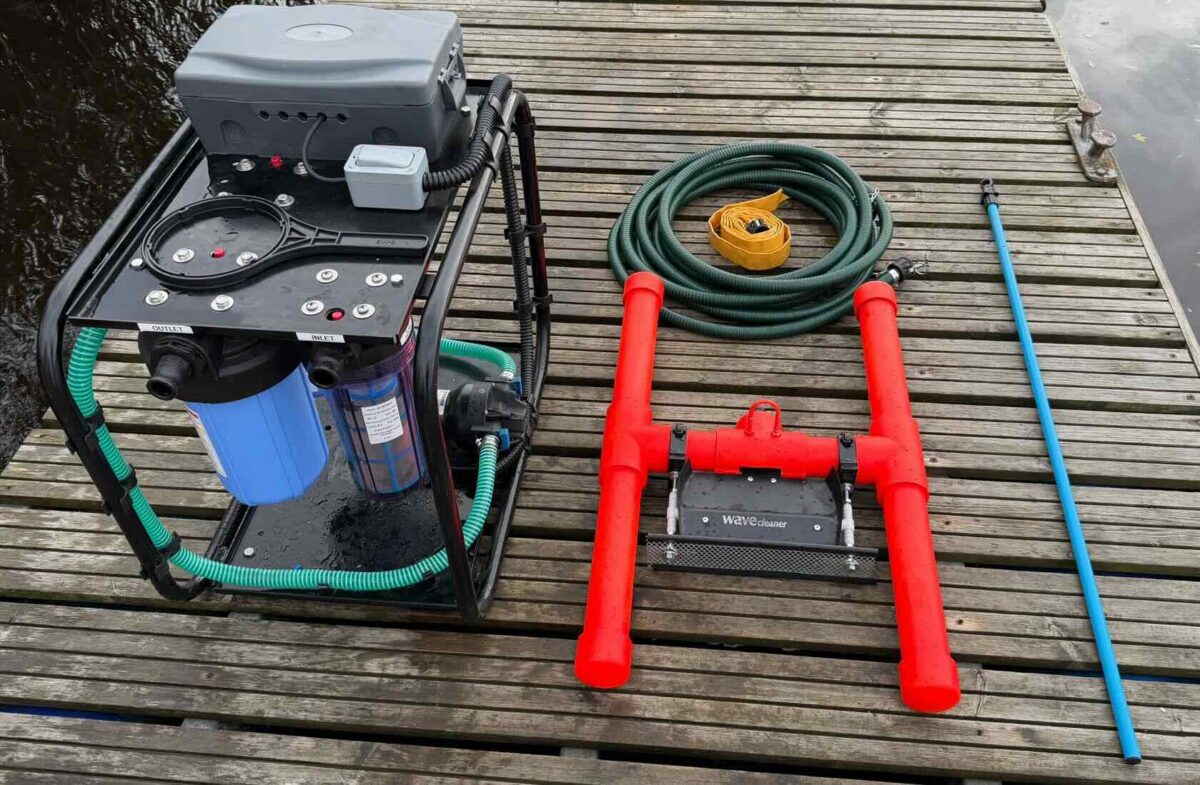
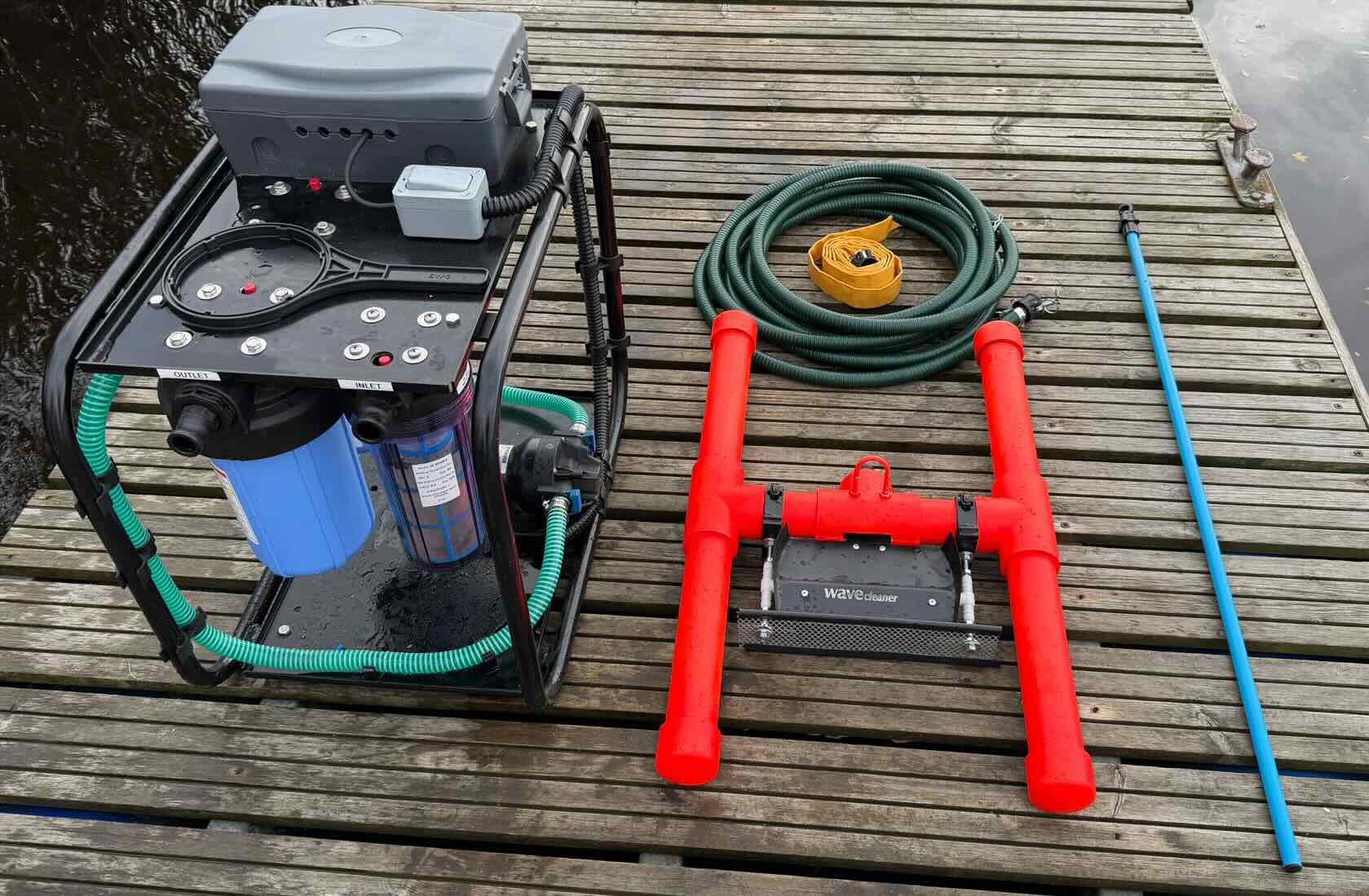
York Marina in the UK, which was recently awarded the highest 5 Gold Anchor rating by The Yacht Harbour Association (TYHA), is using the Wavecleaner VAC to enable its staff to quickly clean up any accidental spills of oil, diesel or other pollutants.
The Wavecleaner VAC system is designed to remove floating debris, hydrocarbons, algae, and other pollutants – including microplastics – directly from the water. Manufactured by Wave International, the specialist portable marina vacuum works by pumping contaminated water through a sediment strainer and two Lloyds Register Type Approved Wavestream System 2 filters. These remove pollutants including micro-plastics ensuring only clean water, to 5ppm standard, is discharged back into the waterway or surface drains.
Wave International launched the upgraded Wavecleaner system last year.
Marina water pollution solution UK
Phil Robinson, head of marina management at York Marina, says that the Wavecleaner VAC is a vital resource to meet the organisation’s environmental contamination procedures and policies. He adds:
“Like every marina, we occasionally get minor oil or diesel spills. Until now, we’ve used standard emergency spill kits using booms and pads to clean up. However, once used, these are heavy and cumbersome to move and dispose of, requiring a specialist company. This results in high disposal costs, and as they come at a cost to restock, these expenses are either passed onto the customer, the insurance company or carried by the marina.”
According to Wave International, the new Wavecleaner VAC’s high capacity pump has a flow rate of 22 L/min with a vertically lift capacity of 3 metres and a discharge head of up to 40 metres. The skimmer head includes a strainer to prevent any large floating debris entering the unit.
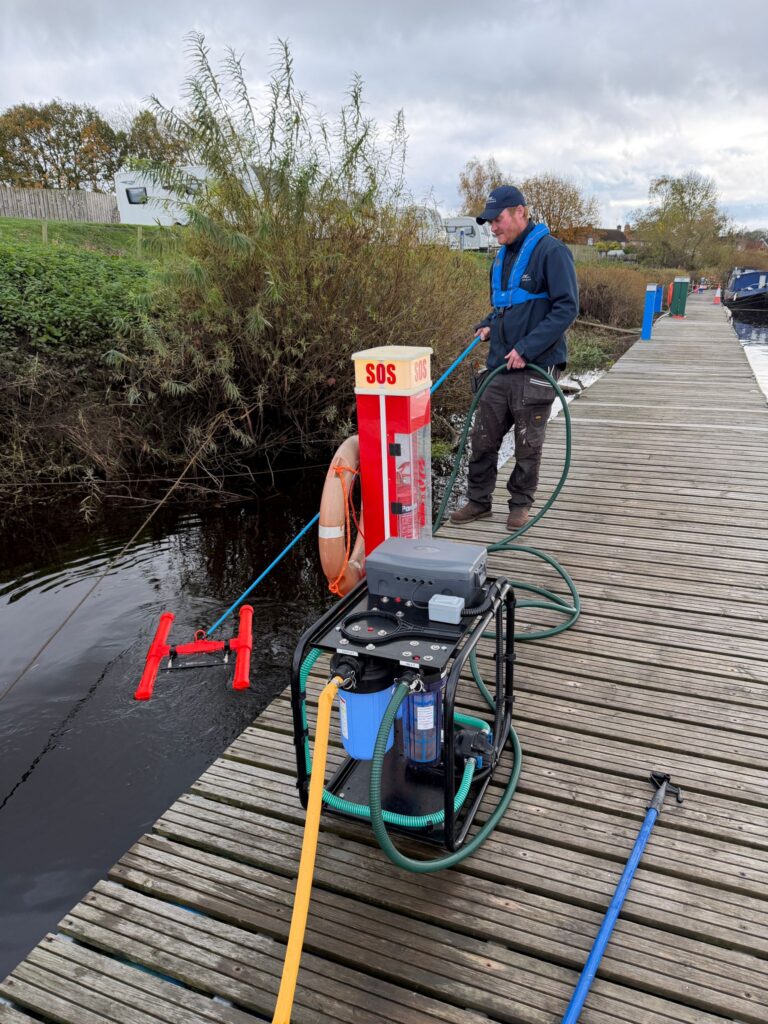
The Wavecleaner VAC is fully portable and mounted within a sturdy cage, and operates using a 12V DC rechargeable, hi-capacity battery pack. Similar in appearance to a small genset, it can be permanently or temporarily sited on a standard marina trolley, or similar, enabling easy and fast access for just one or two operators to the area of the spill.
Robinson says: “The Wavecleaner VAC is a useful addition to our resources, and is a key part of meeting our environmental protection policies. As a compact mobile unit, it’s great for transporting around the marina. It can also be mounted on a small boat to reach the outer areas where access to the water is limited. The independent power pack means there are no cables or need for mains plug in when it’s in use. Using the Wavecleaner VAC means it’s also much easier to dispose of contaminants simply by periodically changing the filter when required.
Even a period of heavy rain can wash low levels of pollutants into the water, and day-to-day operations from boaters running their engine, pumping out their bilges and refuelling create small amounts of pollution that are often visible as blue sheen on the water.
Robinson says: “As well as day-to-day clean-ups, we’ve also had the opportunity to use the Wavecleaner VAC on a fuel spill and it managed the contaminants with ease, as simple as using your home-based vacuum.”
Boaters at the marina are also being encouraged to help prevent pollution by fitting Wavestream bilge filters onto their craft. The compact filters utilise the same technology to remove oil, diesel, microfibres and microplastics from the bilges of boats ensuring only clean water is pumped overboard.
Robinson explains: “Boats on inland waterways require a valid Boat Safety Scheme certificate, and this can sometimes require having a bilge filter system in place to stop contaminants going overboard into the marina or waterways. But even for boats that don’t fall under legislation, we would encourage boat owners to fit systems such as Wavestream that ensure only clean water is pumped overboard, which really helps us maintain the environmental standards required with our TYHA 5 Gold Anchor rating, and helps us protect the micro-diversity of our marina.”
The post Gold Anchor UK marina employs new oil spill clean-up equipment appeared first on Marine Industry News.