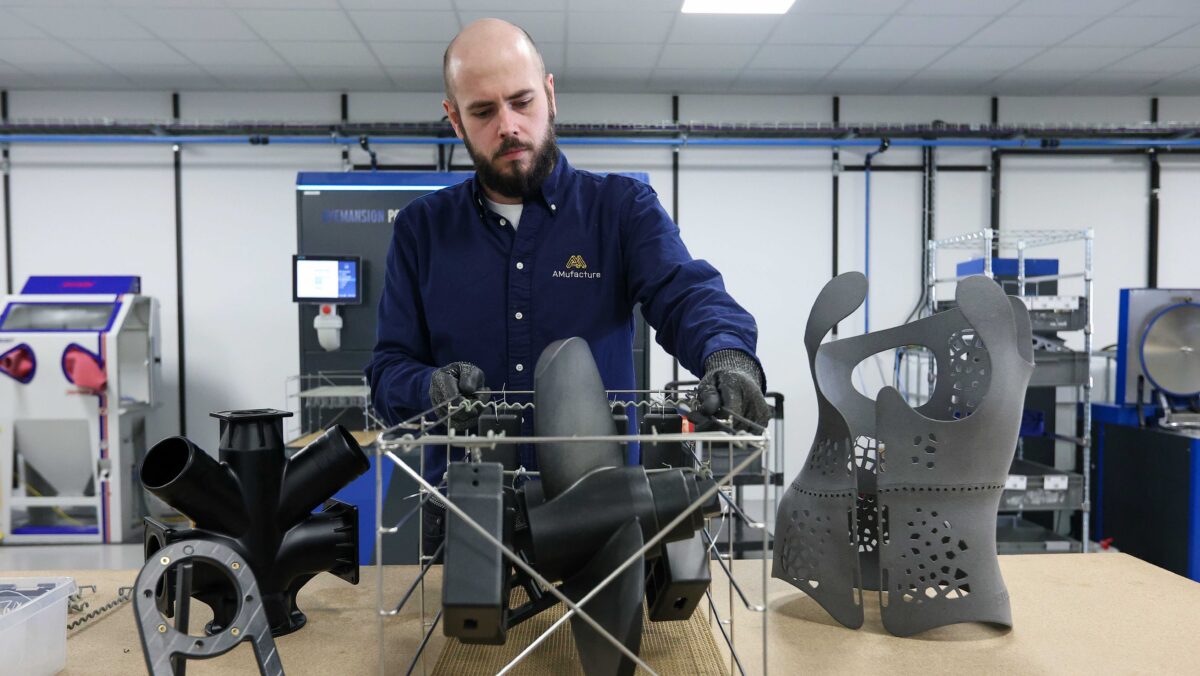
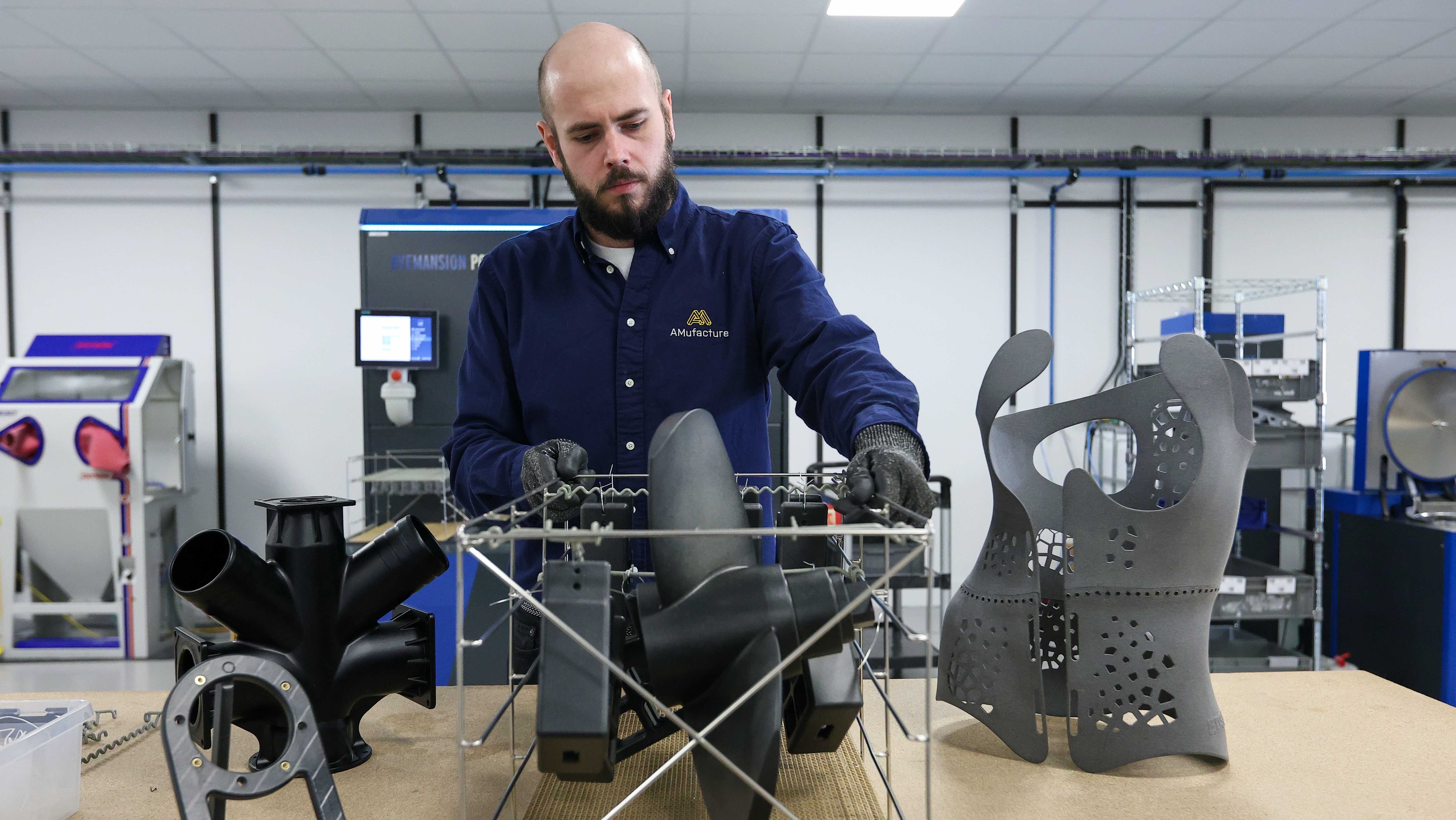
“The days of people thinking 3D printing is just for making models on a desktop machine are well and truly over,” says Will Howden. A former Olympic sailor, Howden has turned his hand to designing 3D specialist printed components for the marine industry through AMufacture, his company that he co-founded with Craig Pyser.
From Olympic sailing to additive manufacturing
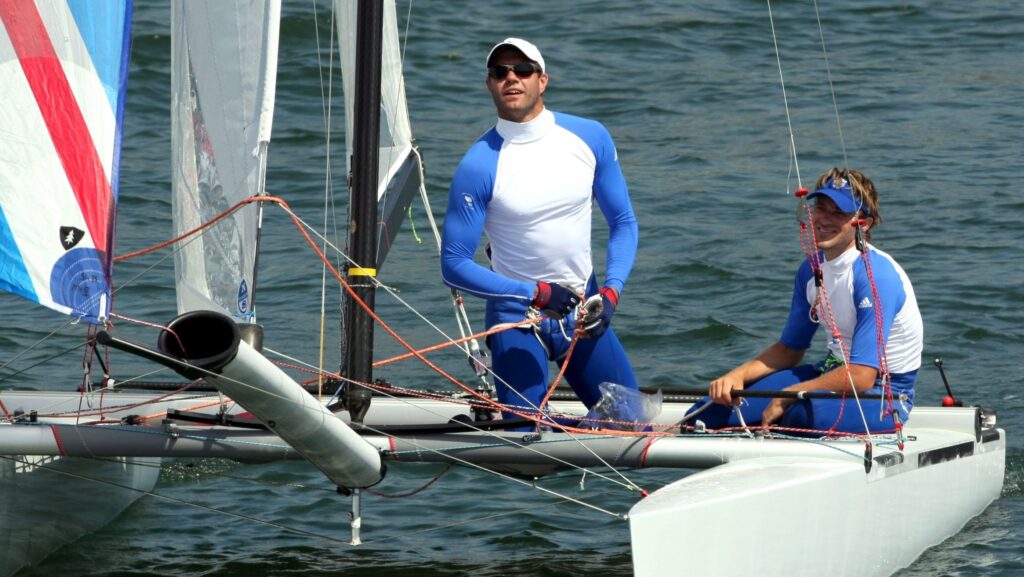
Howden’s been sailing since he was ten years old and went on to represent Team GB at the 2008 Olympics in Beijing, but now he’s producing end-use production parts for some seriously demanding applications, including marine, aerospace and defence.
“People don’t realise how far the technology has come,” he says. “This isn’t prototyping any more. The technology and materials have improved enormously over the last decade, and in some ways, we are only just starting to scratch the surface of what can be achieved.”
While 3D printing has traditionally been seen as an R&D tool, it is very much becoming a proven manufacturing method. Up to 90 per cent of everything Howden produces is destined to be an end part, rather than being used as a prototype.
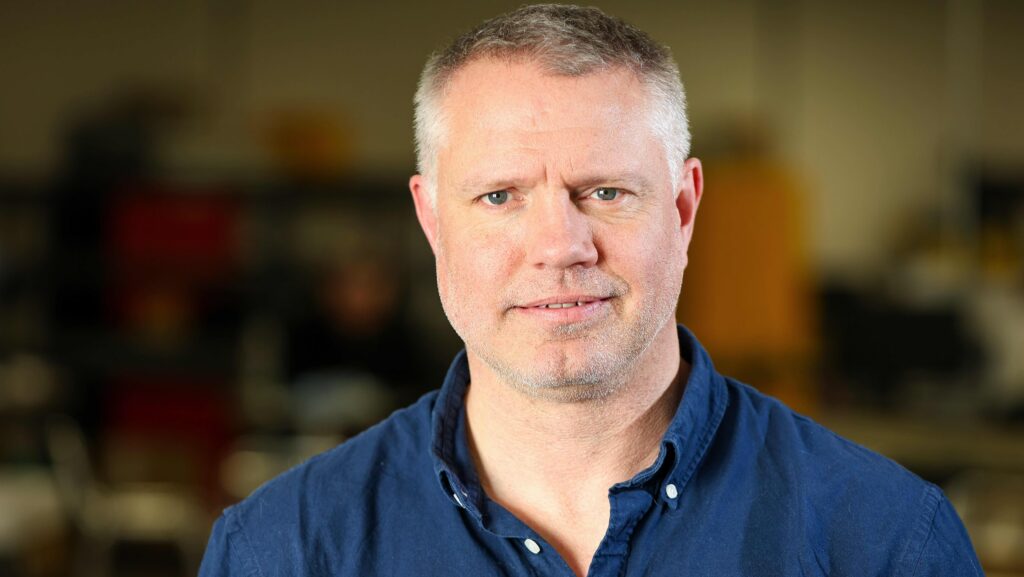
Why 3D printing is no longer just ‘prototyping’
That’s one of his main short-term challenges, he says: education. “There is still a huge number of potential customers who think of 3D printing as a prototyping tool – something you use in the development phase and then hand over to injection moulding or CNC for production.” Changing that perception will take time and take proof, but once people understand the concept and how it works, and who current customers are, Howden says they get that the process can add invaluable advantages.
Howden started printing parts for boats after competing at the Beijing Olympics. He became involved with the Extreme 40 circuit and the Chinese America’s Cup team and started designing and printing parts.
“Sailing friends saw what I was producing and started asking me to do the same for them. I got so busy with it that I thought – there’s a proper business here.
“So, in 2015, I started SO3D, which literally began with a small printer in a spare bedroom at home. The early technology was unreliable, but I kept going, taught myself CAD and just kept pushing. When two major sailmakers took on one of my designs, demand exploded almost overnight.”
The shift to end-use production
The first “real breakthrough” came with the International Moth class. “I designed a series of parts. One of the advantages of using 3D printing was the speed of iterations while prototyping. I would design during the day, print overnight, and the parts would be sailing the next day for testing.”
Howden’s speaking about CAMS for the sail. “The batten sits into the CAM, which then sits onto the mast. The new design meant that they tacked and gybed much better than the original version, giving the boat much better performance through manoeuvres. Also, as they were easily customisable, we could make custom lengths to take out any variation in the sails to help with boat speed.
“Overnight, two major sailmakers adopted the design, and suddenly I had more orders than I could handle. That was the moment I knew additive manufacturing had a serious future in performance sailing – a genuine competitive advantage.”
Now he says the type of parts the company makes for marine clients varies from small custom brackets, grey water manifolds, to large visual styling parts.
“3D printing is changing the way designers/engineers look at the way they can solve problems with challenging parts that might not be able to be made using conventional manufacturing methods.”
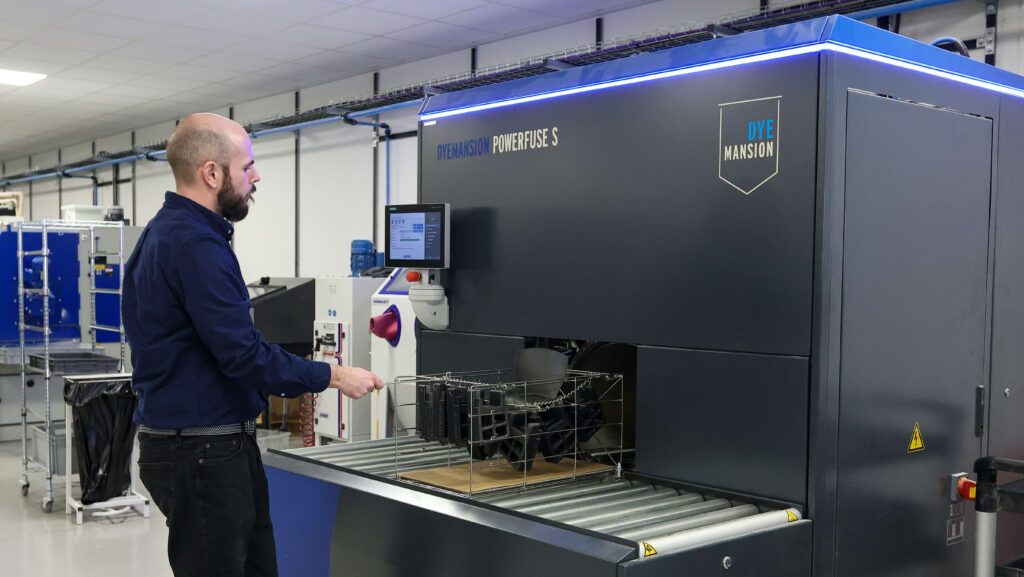
Image courtesy of Chris Moorhouse.
Rethinking the print bureau model
Howden is keen to point out that AMufacture is not a print bureau. “The traditional model in this industry was entirely transactional – upload your file, get a quote, wait ten days for your parts to arrive. No conversation, no relationship, no real understanding of what you were trying to achieve.
“We do it completely differently. When a new client comes to us, we want to understand the application – what is this part doing, what loads is it under, what environment will it be in? We’ll often look at the design and suggest changes that will make the part perform better or cost less to produce.”
AMufacture’s engineers visit clients, and clients visit the company.
“We’ve had senior engineers from major corporations walk around our Portsmouth facility and tell us they didn’t know this level of capability existed.
“Once a project is in production, clients can track their parts in real time through our manufacturing execution system. Every component is individually identified and nothing leaves the building without full inspection documentation. For a lot of clients, that level of traceability is something they haven’t experienced before from an additive manufacturer.”
3D printing and how it works
Additive manufacturing – or 3D printing as it is colloquially known – is the process of building a component layer by layer from a digital file, rather than cutting or moulding it from a block of material.
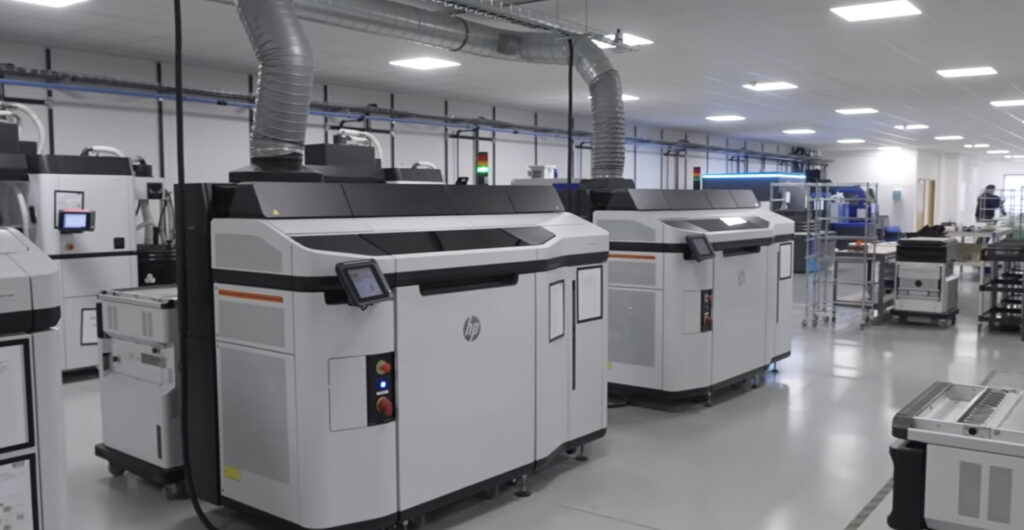
Each layer on AMufacture HP machines is just 0.08 millimetres thick. A typical build might involve 5,000 of those layers, completed in around 12 hours.
One aspect that Howden finds extraordinary is the design freedom that additive manufacturing offers.
“You can produce geometries that are simply impossible with traditional manufacturing – internal channels, complex lattice structures, parts that would previously have needed several components assembled together, produced in one go. And because there’s no tooling required, you can go from a digital file to a finished part in a matter of hours rather than weeks.”
That’s genuinely exciting for him as he loves problem solving.
He says the moment a client sees something that they didn’t think was possible brings him joy. “When an engineer comes in expecting a prototyping conversation and leaves having seen that we can produce their end-use production parts – faster and with more design freedom than anything they’ve done before – that never gets old.
“Every project is a new puzzle. What’s the right material? How should the part be oriented in the build? Can we redesign this to make it stronger or lighter? There’s a creativity to it that I find genuinely exciting.”
The company lists how it works with different industries on its website, including marine.
The bigger picture: a maturing global market
Additive manufacturing is now a £20 billion global market, growing rapidly as it transitions from prototyping into serial production, explains Howden. The UK represents around 5 per cent of that market, with strong capability in high-value sectors like aerospace, marine, automotive and healthcare.
In terms of competition, there is a distinction between consumer-facing print bureaus and contract manufacturers like AMufacture. In recent years, multinationals have turned to contract manufacturing as they progress towards mass production.
What’s changing now is the shift from ‘having the capability’ to ‘delivering production outcomes’.
“This is where the market is consolidating, especially as we move towards in-house capabilities to meet the stringent requirements of audit and certification, such as ISO 9001, as well as classification, such as Cyber Essentials Plus.”
Currently, Howden’s client base spans marine, motorsport, automotive, aerospace and defence. “We work with some genuinely exciting companies – from luxury car manufacturers to racing teams to defence contractors,” he says. “About 90 per cent of our business is repeat customers, which tells you everything about the relationships we build.”
Marine environments present challenging conditions
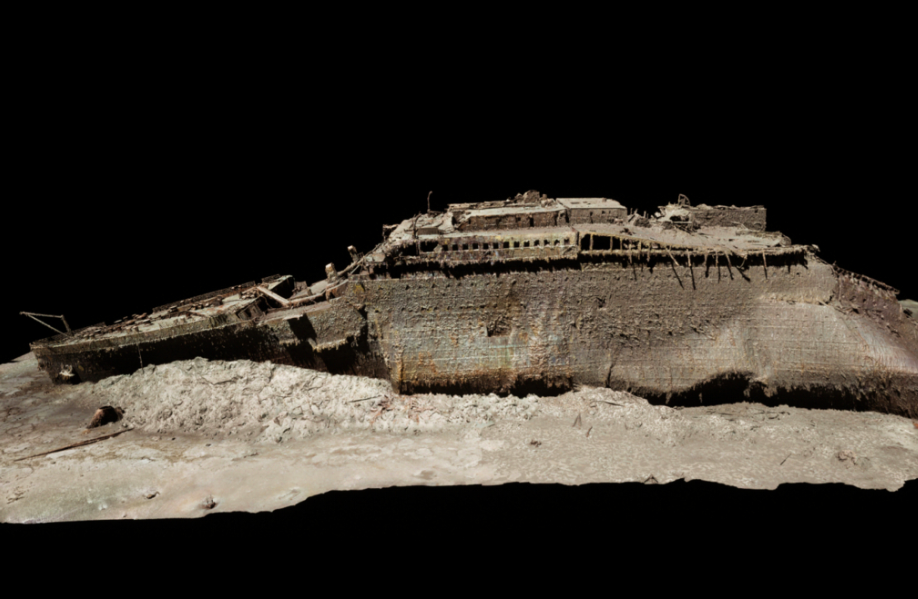
But marine solutions come with an added set of obstacles. Constant exposure to saltwater, moisture, temperature variation, and mechanical stress demands materials that combine durability, chemical resistance, and long-term reliability for marine environments.
Inside the technology: how HP Multi Jet Fusion works
Howden says that HP Multi Jet Fusion (MJF) technology is uniquely positioned to meet these requirements. At the core of MJF’s suitability for ocean applications is its use of engineering-grade thermoplastics such as Nylon PA12. These materials offer an excellent balance of strength, stiffness, and toughness, enabling components to withstand mechanical loads and impacts in harsh offshore conditions.
Crucially for marine use, Howden says MJF parts exhibit strong resistance to chemicals including oils, greases, hydrocarbons, and alkaline substances – common in maritime and subsea environments. This chemical resilience helps prevent degradation over time, extending component lifespan and reducing maintenance requirements.
Materials that survive at sea
Moisture performance is another key advantage. MJF-produced parts typically demonstrate low moisture absorption and can be manufactured as watertight components, especially with appropriate design or post-processing. MJF also delivers isotropic mechanical properties, which, Howden says, means strength is consistent in all directions. This uniformity is essential for parts exposed to unpredictable loads such as wave impact, vibration, and cyclic stresses.
Then there’s the fact that MJF enables the production of complex geometries without the need for tooling or support structures. This allows engineers to design lightweight, optimised components with internal channels, lattice structures, or integrated features that improve performance while reducing weight.
Scaling up: the next challenge
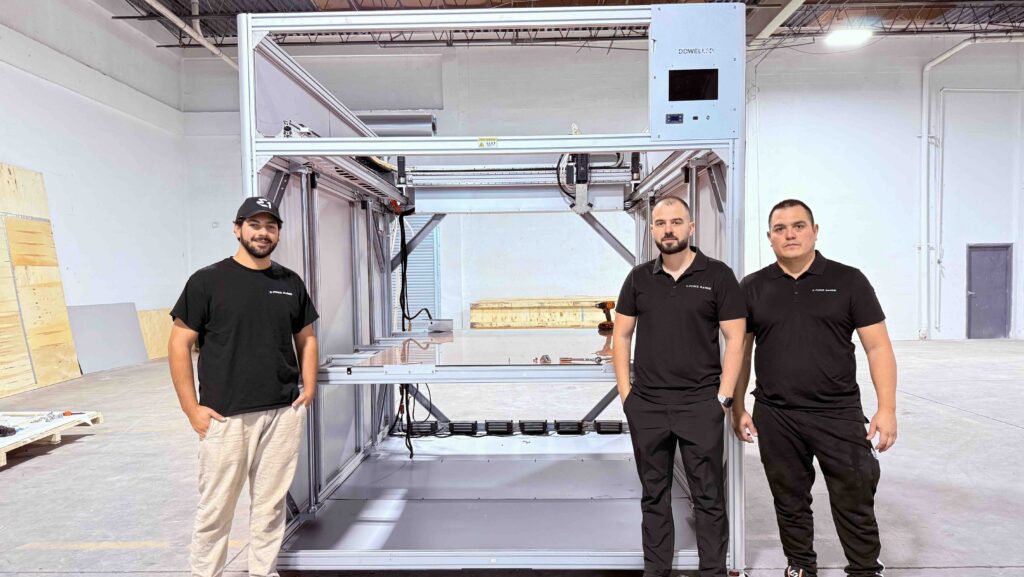
One of AMufacture’s long-term challenges is scale. The technology is evolving rapidly, and staying at the leading edge requires serious ongoing investment. “We’ve made that commitment – our equipment is among the most sophisticated additive kit anywhere in Europe, thanks to our established partnership with HP – but you can’t stand still in this industry,” says Howden.
Co-founder Craig Pyser has been a huge part of pushing the business forward.
Pyser comes from a commercial and business development background across manufacturing, which is very different from Howden’s route into this industry. “He brings things to the business that I don’t, and I’d like to think the reverse is true, too. That kind of partnership – where someone genuinely complements what you bring – is something I learned the value of a long time ago, out on the water.”
Now the defence sector is a big focus for the pair. “Portsmouth is surrounded by major defence and aerospace businesses – BAE Systems, Lockheed Martin, the Royal Navy – and we are actively positioning ourselves to serve that community.
“But honestly, our ideal customer is any engineer who has a design challenge and needs a manufacturing partner who will actually engage with the problem rather than just press print.”
The post Additive manufacturing moves from prototype to production in marine sector appeared first on Marine Industry News.