The International Organization for Standardization (ISO) has approved ISO/TS 23099, a technical specification developed to provide a harmonised method for assessing and comparing the environmental performance of large yachts.
The specification follows a two-year international standardisation project informed by the Yacht Environmental Transparency Index (YETI) Joint Industry Project, led by Water Revolution Foundation.
In 2025, the Water Revolution Foundation issued an open letter to superyacht owners, urging them to advance sustainability through four recommendations, including using the YETI tool.
ISO/TS 23099 has been approved by National Standardisation Bodies within ISO, including those representing Italy, the Netherlands, Germany, Turkey, Poland, the United Kingdom and the United States. The Technical Specification was developed under ISO Technical Committee 8 (TC8), Subcommittee 12 (SC12), which focuses on large yachts.
The specification is the first project delivered by ISO TC8 SC12 Working Group 6 (WG6) on Large Yachts Sustainability & Environment.
Superyacht emissions standard
WG6 convenor Robert van Tol states: “ISO is the way to unite cross-industry experts and proactively work together on own standards where international legislative guidance is absent or proves impractical to implement.
“There is now a yacht-specific method and official reference to be applied for assessing the fleet.”
The technical specification is the result of a five-year joint industry process involving yacht builders, naval architects, technical specialists, research institutes and classification societies. It sets out a methodology to assess and compare the operational environmental performance of yachts measuring more than 30 metres in length.
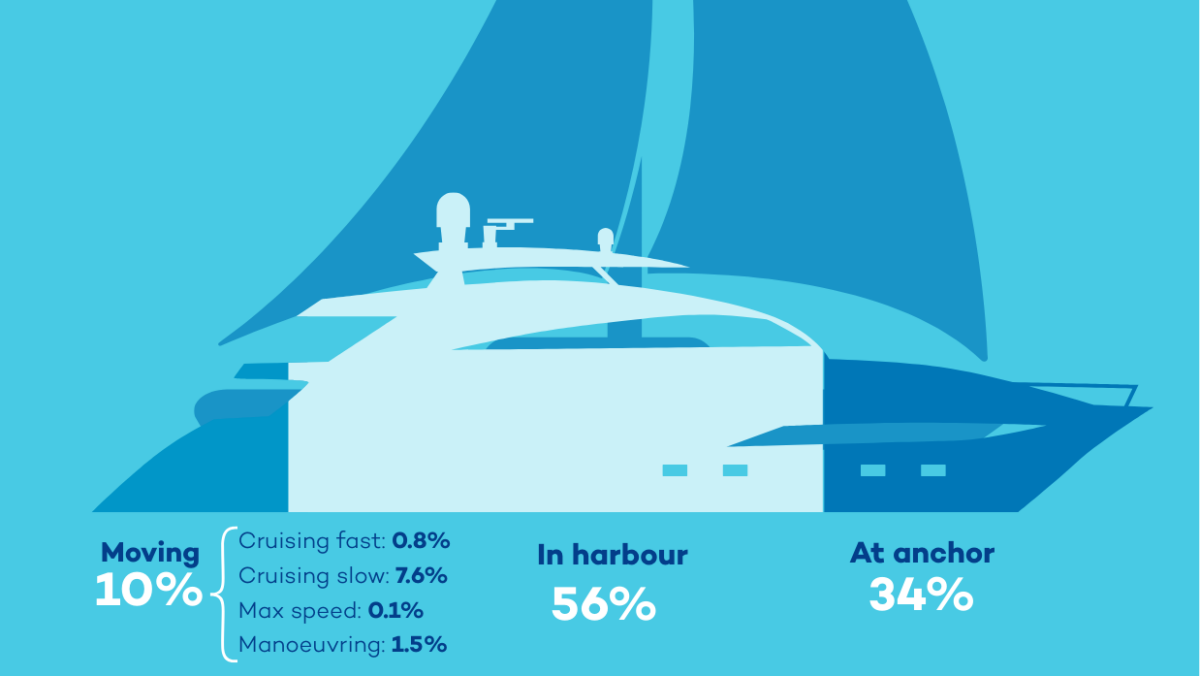
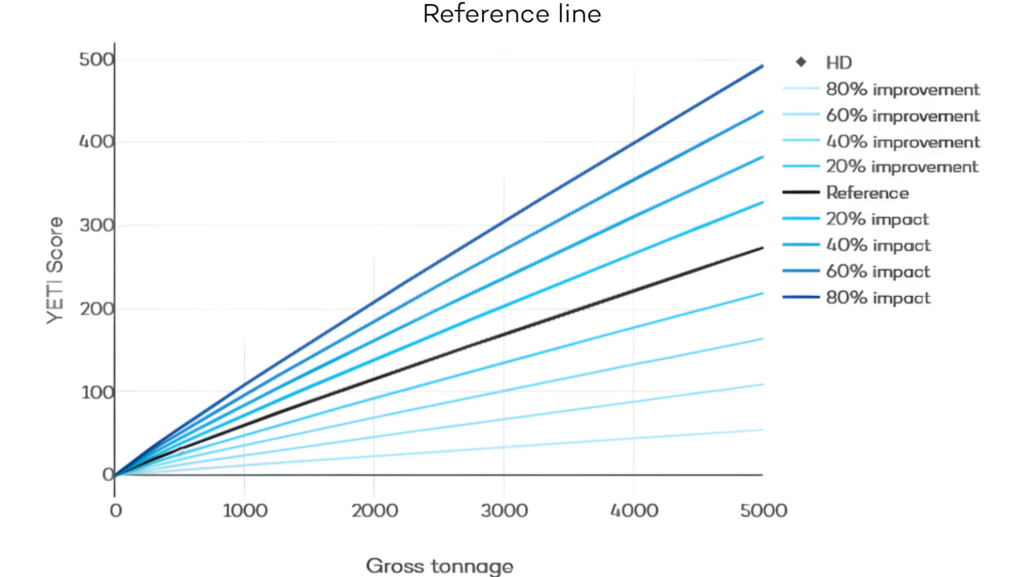
Hanna Dabrowska, technical director at Water Revolution Foundation, explains: “The method benchmarks yachts through a fixed median values operational profile that was statistically found of 10 per cent cruising, 34 per cent at anchor and 56 per cent in port, which is fundamentally different from that of commercial shipping. The result is indicated through a score against a reference line of central tendency of scores in different gross tonnage (volume) categories.”
The outsized carbon footprint of superyachts means — without significant change — emissions from superyachts could easily exceed 10Mt CO2 annually in 2030 — up from 4.7Mt CO2 in 2018, according to the IMO. Spanish yacht refitting company MB92 Group estimated that a superyacht can generate up to 7,020 tonnes of CO2 a year, more than 1,500 times that of a typical family car.

Awwal Idris, environmental expert at Water Revolution Foundation, says: “Next to CO2 equivalent to translate the environmental impact over several indicators into a single score, the TS introduces the more sophisticated EcoPoints, a common factor in life cycle assessment, made up of a combination of various underlying environmental factors, including CO2 and NOx. This outcome enables users to fully understand the impact, but also to work out different scenarios to improve, both for new build and refit projects.”
Lorenzo Pollicardo, technical & environmental director at Superyacht Builders Association (SYBAss), adds: “This approved ISO reference confirms shipyards’ proactive commitment toward the decarbonisation objective and enables further work and validation testing through application and use to make it more robust and widely adopted, setting an instrument useful to also support future yachts tailored emission provisions in the international regulatory framework.
“This and other future projects under WG6, provide shipyards and other industry stakeholders with practical ways toward more environmentally driven yacht design, construction, and operation.”
The post New specification for environmental performance of superyachts approved appeared first on Marine Industry News.