A new study has found a 22 per cent gap in daily pay for men and women, with no surprises about which gender earns less. And the study’s wider stats make depressing reading, as yet again, the marine sector is found lacking.
The results of the 2×25 Review have been published today (4 March 2026) by The Magenta Project, in collaboration with 11th Hour Racing and World Sailing.
The industry knew it was coming. Even when the 2×25 Review was still collating data, Victoria Low, CEO of UK-based sailing inclusion charity The Magenta Project, warned of “concerning results”.
The study examined equity, inclusion and lived experience in sailing and the wider marine industry – building on a similar tranche of work in 2019 – and garnered over 2,500 responses.
Progress at the top, problems at the dock
Now, the findings reveal a stark gap between high-profile progress at the top of the sport of sailing and persistent discrimination, exclusion, and inequity across the broader sailing community and the marine industry.
There are no surprises for the headline statistics. Like the daily pay rate gap above, women are also less based on annual salaries. They earn a median of $35,000 annually compared with $49,000 for men: a 29 per cent gap.
MIN has been reporting on this imbalance for years.
85% of women report sexism
Moving on, sixty-five per cent of all respondents to 2×25 reported experiencing some form of discrimination. And 85 per cent of women have experienced sexism. Obviously, the recent locker room display by Trump and the USA men’s Ice Hockey team has helped show some men what casual – and indeed specific – sexism looks like.
But this is about the marine sector.
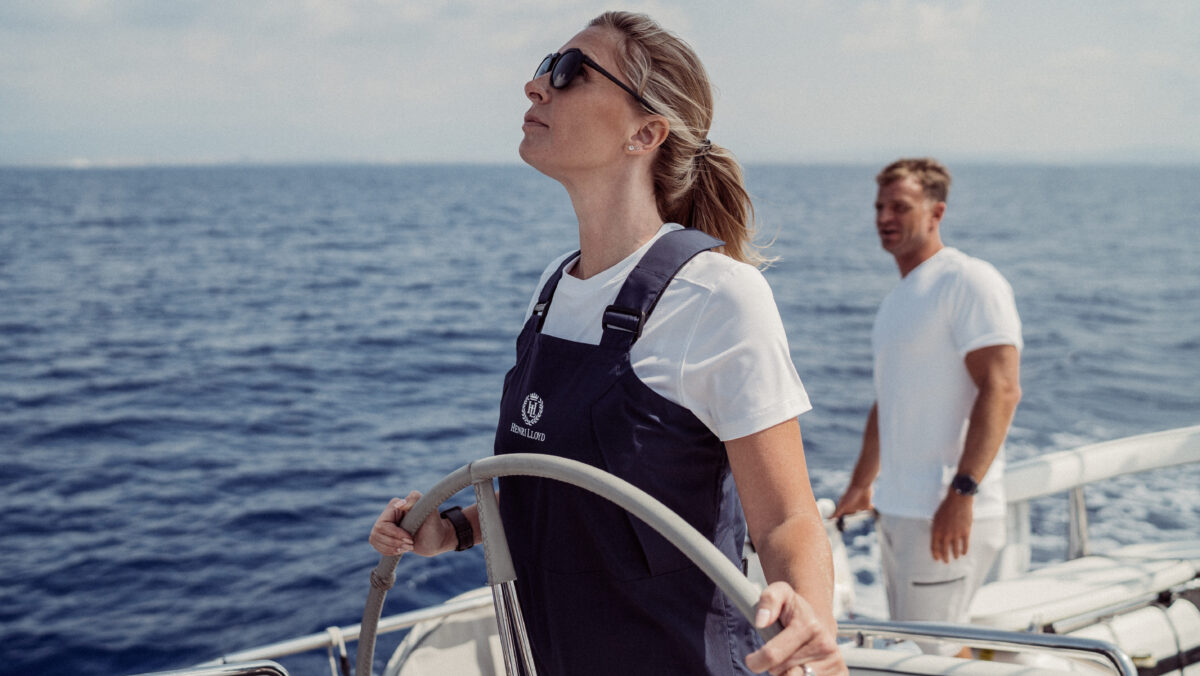
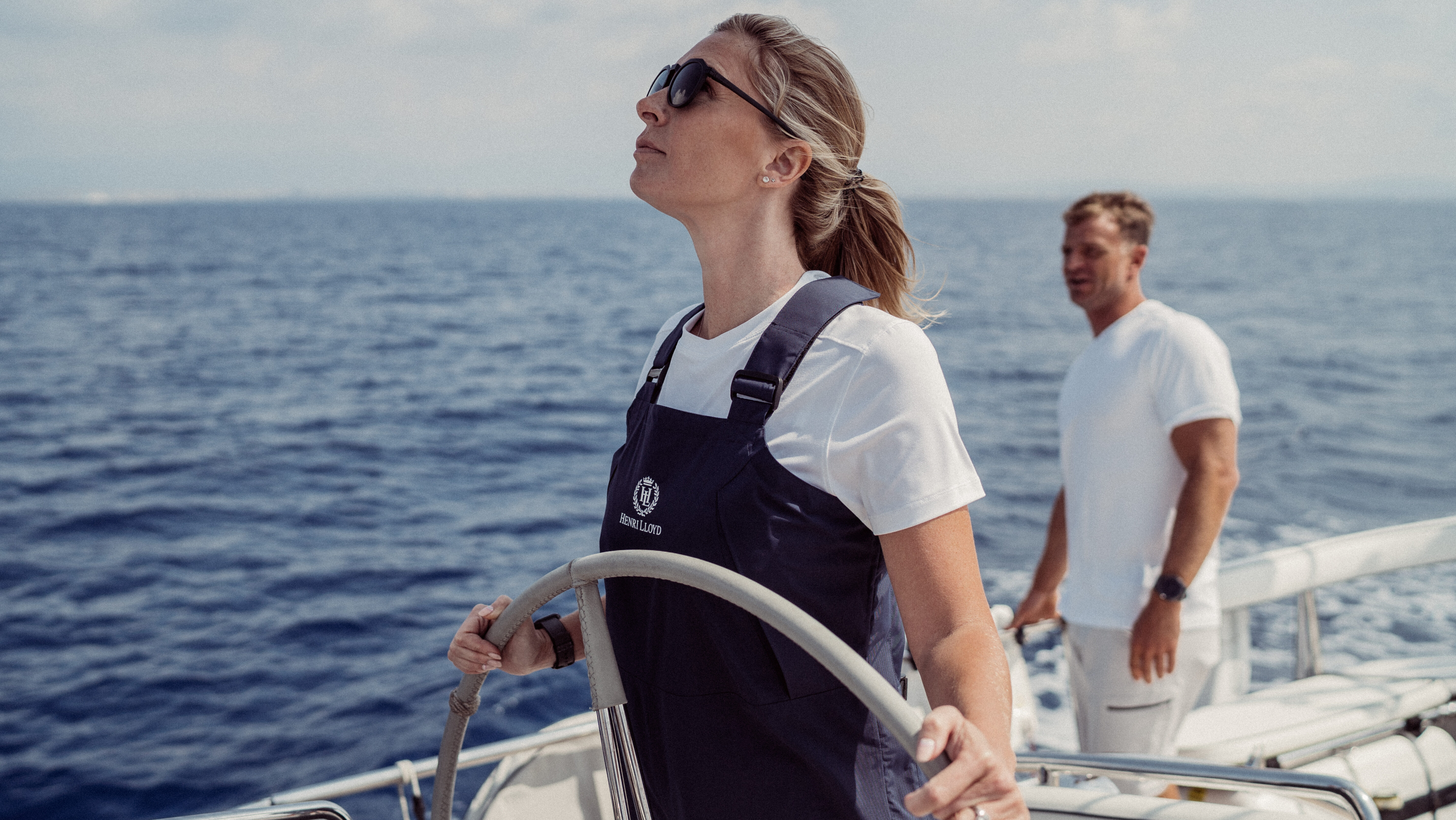
“The 2×25 Review delivers an uncomfortable truth,” says Low (pictured below). “The look and feel of our sport is changing, but the lived experience for too many people within it is not.

“In recent years, sailing has achieved something remarkable at the top. We’ve seen women compete in the America’s Cup, lead Vendée Globe campaigns, and shape SailGP teams. These moments matter. They change what’s possible.
“But our data shows that this progress has not yet reached the clubs, the pathways, or the day-to-day culture that shapes whether someone enters our sport, stays, and thrives.
“The majority of respondents report experiencing discrimination. More than half of women have had to change who they are to feel accepted.”
Leadership gaps and invisible barriers
The review found that nearly 60 per cent of women and 64 per cent of non-binary respondents have had to adapt their behaviour to feel accepted, compared with half of all respondents overall.
“And nearly half of the sport doesn’t know how to report violence or harassment. These are not edge cases. They are defining patterns,” says Low. (Forty-nine per cent of respondents are unaware of any reporting structure for violence, abuse or harassment.)
“This review is not a criticism. It’s an invitation. We now have the evidence, the partnerships, and the roadmap to move from visibility to belonging. The question is whether our industry has the courage to act on it.”
She’s personally disappointed about the fact that there still seems to be no shift in the entrenched culture of the marine sector’s sport and industry. Lip service isn’t followed by actions that fundamentally change the day-to-day. Then there’s “the inability to see that greater diversity and inclusion is a good thing, culturally and financially, and that it will play a big part in strengthening our sport for the future.”
Why reporting structures still fail
There is some feeling of headway being made. Eighty-three per cent of respondents believe female representation has improved over the past five years, and events such as the Women’s America’s Cup, SailGP and the Vendée Globe showcase inclusive competition at the highest level.
But the deeper data shows that many of the structural, cultural and behavioural barriers identified in the 2019 Strategic Review remain largely unchanged.
Almost 60 per cent of women and more than 60 per cent of non-binary respondents do not believe sailing clubs are inclusive to people from all backgrounds. More than 40 per cent of women believe women are not represented in leadership roles within the sailing industry, compared with 25 per cent of men. Over 42 per cent say their organisation has no one responsible for diversity and inclusion. And 42 per cent say they are aware of incidents of non-accidental violence within the sailing community.
“This honest look at where the industry stands today gives us something we can hold ourselves accountable to. Our hope is that this isn’t an endpoint, but a starting line,” adds Michelle Carnevale, president of 11th Hour Racing.
Funding, transparency and accountability as levers for change
The starting line looks like a framework based on principles such as tying funding to inclusion. This means that clubs and federations should have to demonstrate inclusive practice as a condition of funding or affiliation.
Another principle is to fix the pay gap at source by introducing transparent, standardised pay structures and appointment criteria across the sport. Structured mentoring and sponsorship that supports women through mid-career stages, not just at the start, would require support beyond entry-level programmes. The framework also suggests redesigning pathways for modern lives, which means making progression routes flexible and compatible with, for example, caring responsibilities.
And finally, in this tranche of suggestions, 2×25 suggests measuring what matters. That looks like shifting from representation-focused metrics to indicators of belonging, retention and progression, and requiring federations to publish this data.
Given that MIN‘s been reporting on the pay gap since 2019, and it existed way before that, Low says that on top of the framework, honesty could make the difference.
“Pay is always a closely guarded secret, and the change needs to happen higher up the food chain, with the paymasters themselves.
“One respondent, male, simply wrote ‘a lot’ when asked what he earned. To me, that shows there is little regard for equity in this space.
“There are examples elsewhere: Hector Bellerín vocally supported equal salaries at Arsenal; the Welsh FA now pays its men’s and women’s teams the same, with the men taking a 25 per cent cut and the women receiving a 25 per cent rise. The tricky part, of course, comes when you ask people to accept less than they’re currently paid.”
A global dataset 2,500 voices strong
Drawing on approximately 2,500 responses from 68 countries, the data was interrogated with panel analysis and original academic research by Dr Rachel Scarfe of the University of Stirling.
The 2×25 Review does not lack ambition.
But Low says there needs to be an industry-wide solution, and she’s looking for leadership.
“I don’t think this sits with one company; it needs to be industry-wide. But if you’re looking for leadership, you’d naturally turn to the big marine organisations: NTG [North Technology Group], Brunswick and their peers. Some already have great initiatives, such as Brunswick’s Women on Water, but they need to be far more widespread and coordinated.
“We also need to be very conscious that the marine industry is largely made up of SMEs with fewer than ten employees, so perhaps that’s where change has to start, driven by institutional support, and with learnings from the larger players adapted for smaller organisations.”
The framework calls for funding tied to inclusion, transparent pay structures and a shift from counting representation to measuring belonging. The data now exists, drawn from 68 countries and 2,500 lived experiences. The next chapter for sailing will not be written by headline moments on the world stage, but by whether clubs, federations and leaders decide this is finally the moment to act.
The post Sailing’s pay gap laid bare: women earn less – and 85% report sexism appeared first on Marine Industry News.