Chair of the GMBA, Richard Haws, discusses the potential and pitfalls of the marine market in Saudi Arabia.
As the 12th largest country in the world, the Kingdom of Saudi Arabia (KSA) is slightly smaller than Greenland, but larger than Mexico, with a GDP per capita of just over $35,000 growing at 5 per cent (Q3/2025), and a population of 35.3m (2024) with a median age of 30. Increased investment in sport and leisure has seen significant uptake in domestic sport, fitness and wellness following large-scale events including football, boxing, MMA and Formula 1. However, despite these promising metrics and boasting a 3,800km non-ocean coastline bordering the Red Sea to the west and the Arabian Gulf to the east, there are only 31 marinas accommodating 7,300 registered boats, over 90 per cent of which are under 12m.
Following the media rhetoric around Saudi and its significant projects, investments and aspirations, surely this makes yachting a key sleeper, overdue a boost to rival that of property, tourism and automobile uptake?
Is the domestic market ready to satisfy this demand, or is it a prime opportunity for foreign investors, builders and suppliers to enter the market to enable the demand?
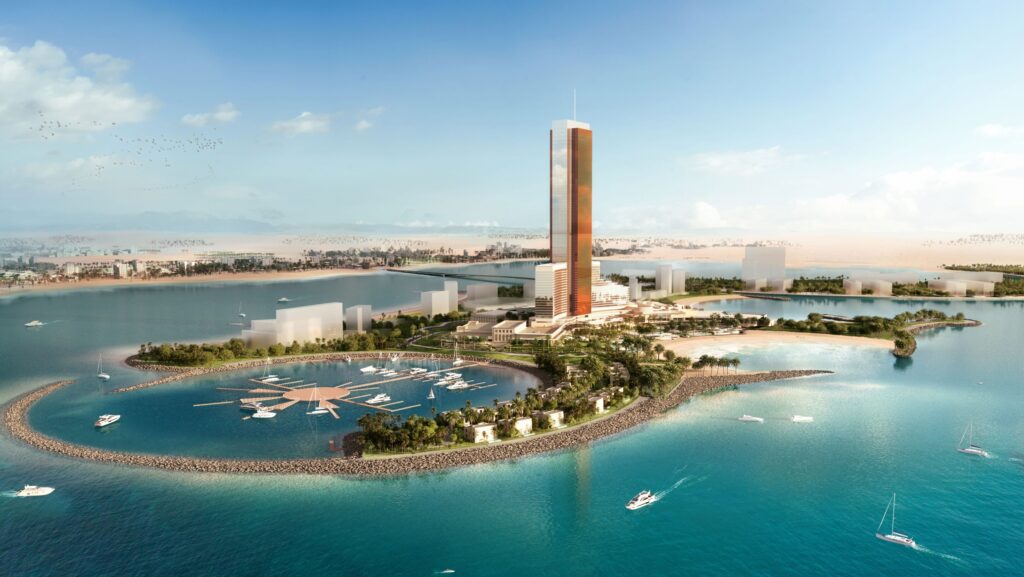
Opportunities for the leisure marine market in Saudi Arabia
The entire leisure marine sector in KSA has been in a stagnant mood for the last five years in comparison to other leisure lifestyle and consumer segments. The mood is well captured by Suhail Kayello, former CEO and board member of Zawariq Industries, and a fifth-generation Jeddah boatbuilder: “There are many opportunities on the horizon and a great expectation of a revolutionary boom in the sector, but hardly anything is happening. It’s a wait-and-see attitude that feels very frustrating if not stifling.”
Edouard Assaf, sales manager for yacht broker Seapros, is more upbeat: “International builders are increasingly interested in the Saudi market, and dealers are optimistic about long-term growth. There is a noticeable trend emerging where younger generations are becoming increasingly interested in boating – not just as a weekend activity, but as part of a broader globally connected and culturally open lifestyle. We are also seeing a growing segment of first-time boaters who prioritise hassle-free ownership, management, and after-sales support.”
KSA has invested significantly in advanced industry data accumulation, much of which is shared in open platforms (GASTAT). However, this data reporting has not been translated to the marine sector, where metrics such as ownership and market size are not in the public domain. In terms of ownership, speculative consensus has the market split with around 50 per cent of the market as fishing orientated (30 per cent professional, 20 per cent sport/recreational), 20 per cent rentals, 25 per cent open cruising and 5 per cent yachts. It is also estimated to be less than 30 sailing yachts in KSA, though sailing catamarans are making an entry and have doubled in the last three years.
For Kayello, the growth inhibitors are severely impacting his boat manufacturing arm: “Before the pandemic, we used to sell around 100 to 130 boats a year on average. After the pandemic the entire market collapsed due to many new conflicting regulations and scarcity of marinas. On average we are building about 15 to 20 boats per year, and these numbers are not economically sustainable or healthy for business growth.”
While Seapros also matched 20 yacht sales this year, Assaf is more expectant for growth in the coming years, “with the development of Red Sea Global islands and the opening of new marinas.”

Many businesses also expected the significant waterfront development projects would offer a B2B sector boost to domestic boatbuilders, but local procurement was minimally sourced. (Left: Richard Haws, GMBA chairperson).
Thwarted marina developments in Saudi Arabia
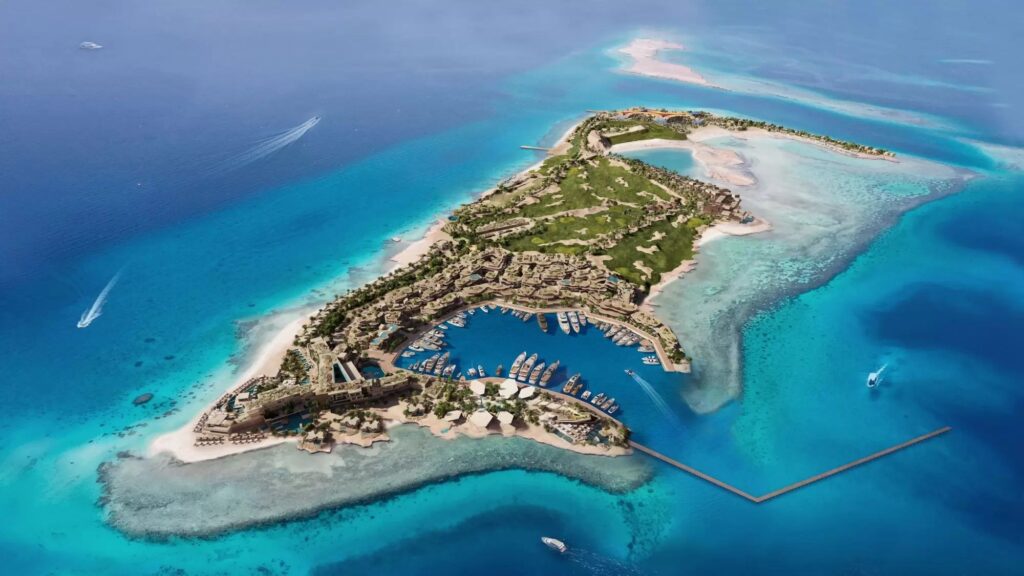
As an iconic proposition with significant funding, Sindalah Island at the entrance to the Red Sea from the Suez Canal was supported by all proponents of the leisure marine sector as a frontrunner for inbound superyacht tourism. Based on the location that had successfully held the inaugural Red Sea Week event in 2019, coordinated by the Robb Report, captains, agents and brokers had high expectations for a new off-Med season destination.
For KSA companies, Sindalah was seen as a poignant attraction to get yachts into the Red Sea, from where they could cruise the Saudi coast in safety and discover the new facilities under development.
However, from the moment of its launch in October 2024, it was reported the facility was not properly completed or given the autonomy to operate as per the expectations. Despite the best efforts of key operators and agents including IGY Marinas trying to make the destination work for their clients, the island has been effectively closed pending change of asset management to Red Sea Global.
The future plans and programme for the island are not as yet known, and the significant media fallout has negatively impacted other Red Sea destinations that are inbound yacht ready. But there is more to Saudi than Sindalah.
Current headwinds
There has been significant international media focusing on the development of up to 25 new superyacht-ready marinas across both coasts of KSA, and while excellent for mid-to-long-term ecosystem growth and destinations, it is not directly addressing the pivotal challenges the industry faces.
Capt. Stephen Corbett, CEO of MENA-wide yacht agency JLS Yachts, explains: “The marina developments are all in giga projects, and nobody is looking at smaller marinas up and down the coast.”
This top-end focus is an issue mentioned by multiple leaders, as are the barriers to grassroots boating and the lack of development in this sector.
Although the government has developed programmes and incentives, in reality, these have not translated into actual actions for the leisure marine space. Ongoing ‘squeeze’ is on the basic functional requirements of entry-level boating – small boat berths, trailer boating, dry berthing and service offerings – and the restrictive regulations around ownership, passenger and cruising areas.
Changes and improvements are happening, particularly in beta-testing digital tools, but are frustratingly slow relative to the positive economic and social changes in other areas.
While many of the social drivers needed for boating are already present in Saudi (focus on lifestyle spend, family outings, adventure tourism, leisure sports, private ownership), restrictive policy is currently inhibiting natural organic growth drivers by obstructing ease of ownership. A simple example from one broker was the inability for boats on trailers to be launched and retrieved at slipways and stored at your home – a practice which is commonplace around the Arabian Gulf nations – due to all boats requiring a water berth to satisfy registration requirements.
There are fewer than ten registered yacht dealers in KSA, limited to a few large brand-basket conglomerates, with boat sales business licenses being prohibitively expensive for SMEs due to the high bond requirements.
Ensuring after-sales support is also a concern for dealerships due to a shortage of service infrastructure, which affects both customer satisfaction and brand reputation. “Clients expect high-quality after-sales support, but existing facilities have limited lifting capacity and space,” explains Assaf.
The supply chain for official parts is reported as sometimes challenging due to official importation delays. Saudisation (the Saudi nationalisation scheme) requirements for key positions and workforce employment are also costly for SMEs, owing to the lack of existing skilled labour and the expense of training from scratch.
For JLS Yachts, the practicalities of over-regulation and outmoded policies are a sticking point. Corbett adds: “There is still no movement on visas for crew, and the border guard still imposes far too many restrictions over the waterways to entice new boat owners. However, the digital Ebhar System platform is working, and we have great expectations from the promised upgrade from the beta version.”
Destination options and flexibility are also encountered by Seapros: “New projects are transforming Saudi Arabia with more consistency, structure, and long-term vision than ever before. However, we are still missing comprehensive waterfront developments and more flexible sailing permits to enable easier daily use of boats,” says Assaf.
The tide is turning…
Boating in KSA has historically been restricted due to cultural and security regulations, removing spontaneity and freedom of movement, which are two major drivers for leisure marine lifestyle investment.
However, in line with sweeping social and economic reforms across the country, in recent years, cultural segregation and restrictions have been relaxed, leaving over-protectionist regulation policy as the remaining barrier to industry growth.
Reducing barriers to entry is critical for all industry leaders, for both the potential customer and business owner. Encouraging SMEs, FDI and regional branches for established MENA marine businesses through dedicated maritime industrial zones with water access has been voiced, while also encouraging easier access to marine finance and insurance products for owners is addressed to the finance market.
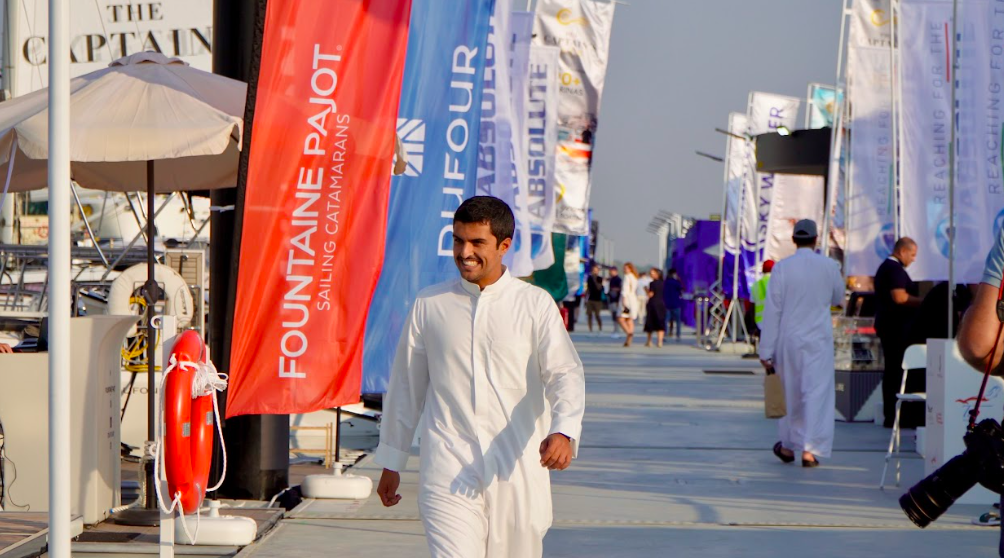
Raising the profile of boating and watersports is a consistent rhetoric across all boating bodies worldwide, and even more so in fledgling domestic markets. Creating regional (not necessarily international/high-profile) boat shows is important in engaging the public and promoting local business. The Jeddah F1 – though approaching its last year – brought some international yachting engagement, but linking yachting to other cultural events like the Red Sea Film Festival could be significant.
The current challenges to growth are well documented and are being addressed by various agencies, so the industry is now relying on the ongoing efforts of the authorities to address regulatory issues concerning access, ownership, usage, movement, and the ability of SMEs to support growth.
As Kayello summarises: “The authorities must encourage and support private enterprise to lead initiatives for individuals & businesses to venture into the sea with recreational, tourism, and sports-related activities.” This is endorsed by Edouard as a driver for growth: “Encouraging growing curiosity from younger Saudis signals a promising future in terms of both engagement and sophistication of the boating clientele.”
In conclusion, the Saudi boating market is still a myriad of positions. From the affluent and knowledgeable owner, with international experience of charter, ownership and brand experience in Europe or the US, who is choosing not to invest in current market conditions; to the existing marine companies watching margins in a highly competitive small market; to the immense demand potential based on the data indicators, property market signals and publicised economic roadmaps. Is Saudi an investment opportunity to watch? Most definitely. But proceed based on reality, not rhetoric.
Richard Haws is chair of the Global Marine Business Advisors (GMBA) and the organisation’s representative for the Kingdom of Saudi Arabia.
The post Saudi Arabia: the next marine investment frontier – or still a waiting game? appeared first on Marine Industry News.