
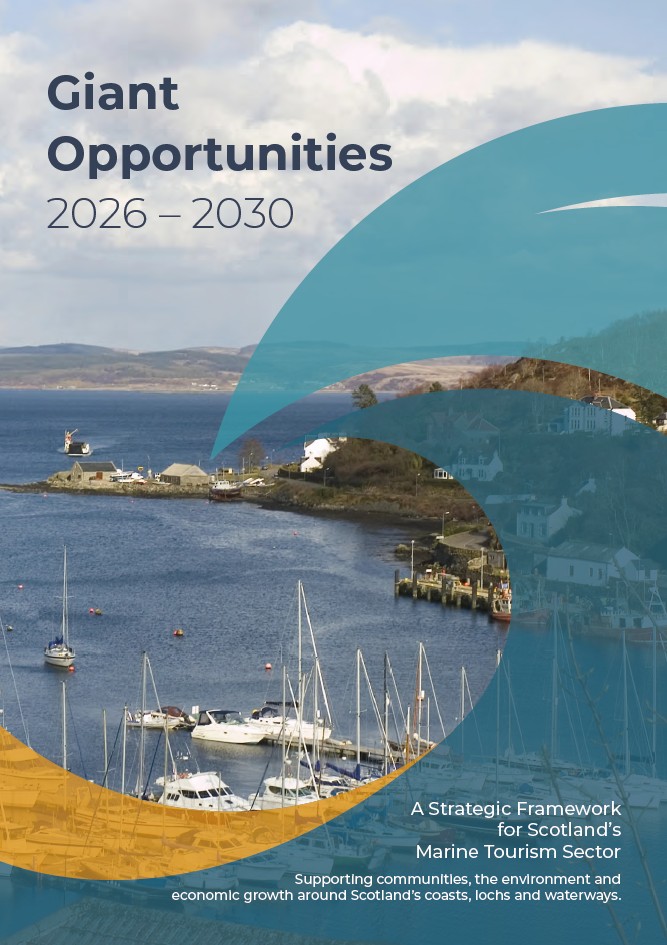
British Marine Scotland has published Giant Opportunities (2026-2030), a strategic framework outlining priorities for Scotland’s marine tourism sector over the next five years. The document follows earlier strategies aimed at expanding the sector’s economic contribution and supporting coastal communities.
The framework builds on Awakening the Giant (2015) and Giant Strides (2020-2025), initiatives intended to encourage investment and coordinated development across Scotland’s coasts and islands. The earlier strategy set targets to increase visitor spending and the economic value of marine tourism. Investment linked to the programme approached £25m, while sector gross value added (GVA) rose to more than £400m during the period in which it was implemented.
Scotland’s marine and coastal tourism sector supported more than 34,500 jobs and generated £699m in GVA in 2023. The framework outlines a pathway to increase this contribution by a further £100m within five years, reaching £800m by 2030.
Giant Strides continued these efforts despite the disruption caused by the pandemic and was associated with more than £80m in Growth Deal and Levelling Up Grant funding applications for marine tourism projects across Scotland’s coasts and islands.
Several projects linked to these initiatives have already been delivered, while others remain under development. These include Arran and Millport pontoon projects, the Kintyre Sea Sports Hub, Stranraer Watersports and a waterfront marina development in Stranraer. Together they represent around £50m in investment expected to materialise within the next one to four years.
The new framework was funded by Crown Estate Scotland and developed by British Marine Scotland with industry and public sector partners. It is intended to guide cooperation between businesses, local communities and government.

Four priority areas are identified: increasing sector value and visibility, strengthening skills development and career pathways, supporting community partnerships and placemaking, and addressing sustainability linked to the transition to a lower‑carbon economy.
The document also highlights emerging opportunities linked to changing visitor demand, including paddle and board sports, nature‑based tourism, wildlife experiences and marine‑based health and wellbeing activities.
Sarah Kennedy, chair of British Marine Scotland, says: “We know there are great opportunities ahead for Scotland’s marine tourism sector, as well as critical challenges that must be addressed. This framework highlights both and sets out focussed and collaborative effort is most needed.
“By working together, across industry and with government, we can unleash the full potential of Scotland’s marine tourism offer and, in turn, generate sustainable employment that will strengthen our communities and protect our outstanding natural environment.
“British Marine Scotland stands ready to help facilitate this work in the months and years ahead, and we urge government and all our partners to get behind this shared vision.”
The framework also highlights the role of marine tourism in rural regeneration and place‑based development. Industry organisations involved in its preparation note that collaboration may help address skills shortages and funding constraints affecting smaller marine tourism businesses.
The strategy ties in with wider national policy objectives, including Scotland Outlook 2030, which outlines priorities for economic development and Scotland’s blue economy.
Hamish Macdonell, head of corporate affairs, Crown Estates Scotland, says: “Giant Opportunities provides a clear and compelling roadmap to safeguard the future of Scotland’s marine tourism sector. We commend the leadership that British Marine Scotland has shown in bringing partners together to develop this framework. We now urge businesses, local communities, and government to get behind this ambitious framework and work together to deliver it.
“Crown Estate Scotland will provide further support to the sector through its Community Capacity Grants programme, which is set to distribute £350,000 to community organisations across the country. The successful applicants include four projects seeking to deliver marine skills training. Further details will be published on the Crown Estate Scotland website later this month.”
The full strategy document is available through British Marine Scotland.
The post Scotland outlines marine tourism strategy targeting £800m by 2030 appeared first on Marine Industry News.