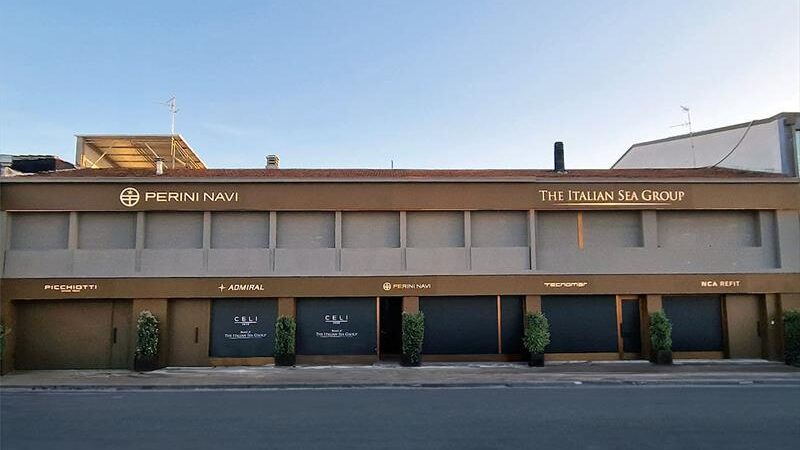
The Italian Sea Group (TISG) has launched an independent forensic investigation into ‘unauthorised’ overspending, two weeks after the firm took a shareholder loan of €25m to mitigate an erosion of its cash position.
News of the investigations comes following the resignation of chair Filippo Menchelli and vice chair Marco Carniani last week, with the board of directors unanimously electing CEO and founder Giovanni Costantino as chair.
Workers at The Italian Sea Group staged a two-hour strike in February, before the loan was secured, after their wages were delayed by eight days due to liquidity problems.
At a meeting held on 26 February 2026, the company’s board of directors acknowledged – based on a preliminary analysis conducted by the CEO with appointed advisers – that the company incurred ‘significant’ extra-budget costs in executing orders. The board states that this arose from a ‘system implemented by a group of individuals designed to circumvent the controls preventing expenditure in excess of the budget approved for each project.’
TISG says the total amount of extra-budget costs will be determined once the investigation concludes.
The boatbuilder says its initial internal findings indicate that ‘certain senior executives’ have declared themselves responsible for actions carried out without the knowledge of the CEO, the board of directors or the supervisory bodies. The CEO has informed the board that formal disciplinary warning letters have been issued to the individuals identified to date, in some cases with precautionary suspension.
KPMG has been appointed to carry out the forensic review, covering current order management, the internal control model and financial management. The preliminary phase is expected to last four to six weeks, followed by further sampling over the subsequent two months, depending on what emerges. A preliminary red flag report is expected within six weeks and will be submitted to the board based on a significant sample of orders.
TISG says preliminary analysis suggests that a ‘significant proportion’ of the extra-budget costs may already have been recognised in the profit and loss account in previous financial years. Any remaining amounts relating to orders in progress will be provided for in upcoming financial statements. The accounting review and preparation of the financial statements as at 31 December 2025 are expected to take around three months from the start of the forensic process.
The company says the situation has progressively eroded its cash position, creating a ‘financial crisis’ that necessitated the board’s approval of a shareholder loan of €25m on 18 February 2026.
The loan was provided by the majority shareholder GC Holding, attributable to CEO Costantino. TISG says it will update the market once verified findings are available, including any deviation from previously communicated guidance. In the meantime, the firm says Costantino has begun discussions with shipowners of vessels under construction with a view to recovering additional costs.
Workers stage two-hour strike after wages delayed
The CEO informed the board that employee salaries were paid eight days later than usual due to liquidity constraints between 4 February 2026 and the completion of the shareholder loan on 19 February 2026. As a result of the delayed salaries, a workers’ assembly was held, and a two-hour strike took place.
The company says it does not currently anticipate using government-supported furlough schemes in order to maintain ongoing contracts.
TISG has opened discussions with banks and factoring companies to agree on measures to address the financial position. An initial meeting with lenders is scheduled this week, and further updates will follow as discussions progress.
The company says it will keep the market informed of material developments in accordance with legal and regulatory requirements.
Fallout from 2024 Bayesian sinking
The Italian Sea Group made global headlines after the sinking of the superyacht Bayesian in Italy in August 2024. The accident claimed seven lives, including that of British technology entrepreneur Mike Lynch and his daughter, Hannah.
The yacht – once described by its builders as “basically unsinkable” – had been built in 2008 under the Perini Navi brand, which The Italian Sea Group acquired out of bankruptcy in 2021, along with its archives and real estate.
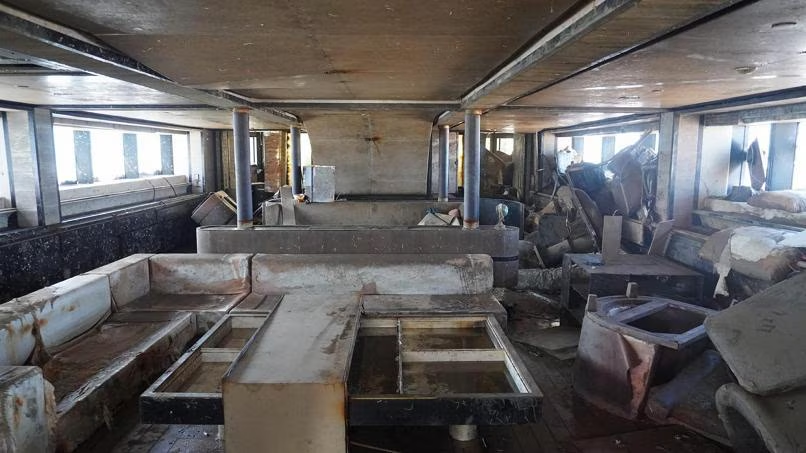
In January 2026, the Italian Sea Group reportedlty launched legal action in Sicily, seeking almost £400m from the Lynch’s widow, arguing that it suffered severe commercial damage after the sinking of Bayesian.
Court papers filed by the Italian shipbuilder seek €456m in damages and name Angela Bacares Lynch, along with the yacht’s captain and two crew members, as defendants.
Bacares Lynch survived the incident and is the legal owner of Revtom, the Isle of Man–registered company that owned the vessel. The case was lodged in Termini Imerese, close to the location off the Sicilian coast where the yacht capsized.
Lynch, founder of the Cambridge-based software company Autonomy, had recently been acquitted of US fraud charges and was on board with family and friends at the time of the disaster.
The Italian Sea Group alleges that the loss of the yacht was caused by a series of failures by those operating it. In its claim, the company says the crew did not close hatches, failed to respond adequately to weather alerts and did not deploy the vessel’s keel, leading to the yacht capsizing in strong winds.
The filing argues that responsibility lies with the crew and with Revtom, which it says is liable for their actions. The defendants include the captain, James Cutfield, and crew members Timothy Eaton and Matthew Griffiths. Italian prosecutors have previously confirmed that crew members are under criminal investigation.
‘No Perini-branded yachts sold since the sinking’
The shipbuilder maintains that it has been wrongly blamed for the tragedy and that the resulting scrutiny has negatively impacted its business. It claims to have lost hundreds of millions of euros in revenue, suffered a sharp fall in its share price and seen the value of the Perini Navi brand collapse. According to the company, planned yacht sales worth close to €1bn by 2028 have failed to materialise and no Perini-branded yachts have been sold since the sinking. It also says interest from brokers and prospective buyers has dried up entirely.
A source close to the Lynch family rejected the claim, telling the Telegraph: “This claim is as cynical as it is predictable. The UK investigation has raised serious, unresolved questions about the yacht’s design, stability and operating characteristics, including vulnerabilities unknown to the owner and crew. This action appears designed to distract from those issues, but it will not prevent proper scrutiny of how the vessel was designed, approved and built. It is desperate, opportunistic and in bad faith.”
Those comments reflect findings from the UK Marine Accident Investigation Branch, which reported last year that the yacht had ‘vulnerabilities’ of which the crew were not aware, including issues linked to its unusually tall mast. The shipbuilder’s position is that the design was sound.
The Italian Sea Group has not commented publicly on the reported lawsuit.
The company has previously taken legal action against media organisations, including a lawsuit against The New York Times following reporting that questioned the yacht’s design.
The post The Italian Sea Group launches overspending probe amid ‘financial crisis’ appeared first on Marine Industry News.