An ongoing investigation into the loss of the sailing superyacht Bayesian off Sicily in August 2024 has indicated that weather alone was unlikely to have caused the sinking, according to new claims published by Sky News.
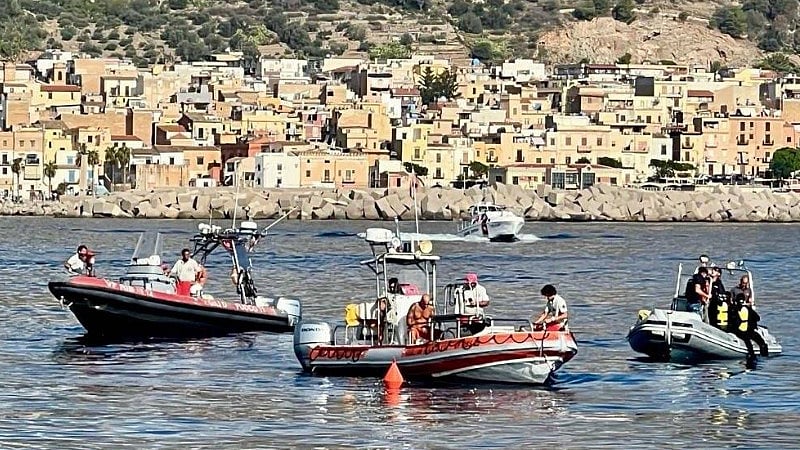
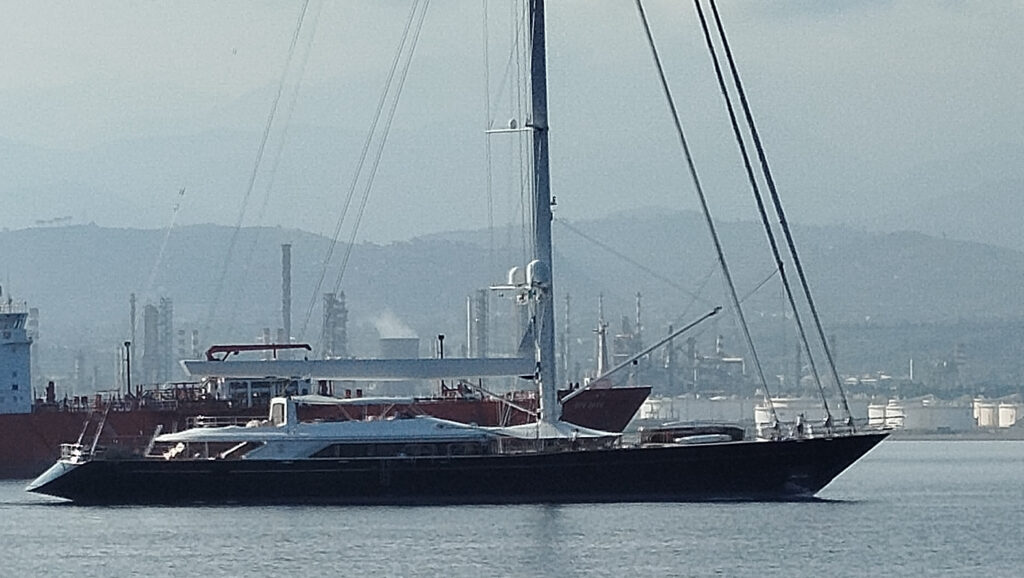
The 56-metre yacht went down in the early hours of 19 August 2024 near Porticello, close to Palermo, while at anchor. There were 22 people on board. Fifteen survived, while seven died, including British technology entrepreneur Mike Lynch and his 18-year-old daughter, Hannah.
Italian prosecutors commissioned expert analysis of the conditions at the time of the tragedy. According to the prosecutors’ findings – first reported in Sky News last week, and subsequently picked up in outlets including The Independent, LBC and The Sun – the weather was assessed as “little more than a squall, a sudden increase in wind speed that precedes thunderstorms and downpours”, which should have been manageable for the crew.
According to the preliminary findings, the yacht therefore sank “due to the crew’s improper actions, their underestimation of the weather, and certain safety devices not being activated properly,” Sky News reports.
On that basis, investigators are understood to be examining whether decisions on board played a part, including how the situation was handled by crew, how the conditions were judged, and whether safety systems were used as intended.
Mike Lynch’s court-appointed armed guard pays tribute to him and daughter Hannah
Full story
https://t.co/YamTmSFThR
— Sky News (@SkyNews) August 25, 2024
The public prosecutor’s office in Termini Imerese is leading the inquiry and is considering potential charges including negligent shipwreck and multiple counts of manslaughter. The yacht’s captain, James Cutfield, along with crew members Tim Eaton and Matthew Griffith, are under investigation. Prosecutors reportedly say their actions on the night may have contributed to the sequence of events that led to the capsize and sinking.
These findings sit alongside earlier conclusions from the UK’s Marine Accident Investigation Branch (MAIB) and several naval architects. The MAIB’s interim report, published in 2025, pointed to strong and rapidly increasing winds as a key factor in the incident. It found that a sharp rise in wind speed shortly after 4am caused the yacht to heel to around 90 degrees in a matter of seconds. Andrew Moll, then chief inspector of Marine Accidents, said that “the situation was irrecoverable” the moment the yacht heeled past 70 degrees.
Work carried out by MAIB with input from the University of Southampton’s Wolfson Unit for Marine Technology suggested that, under certain conditions, wind acting on the vessel’s profile could lead to capsize.
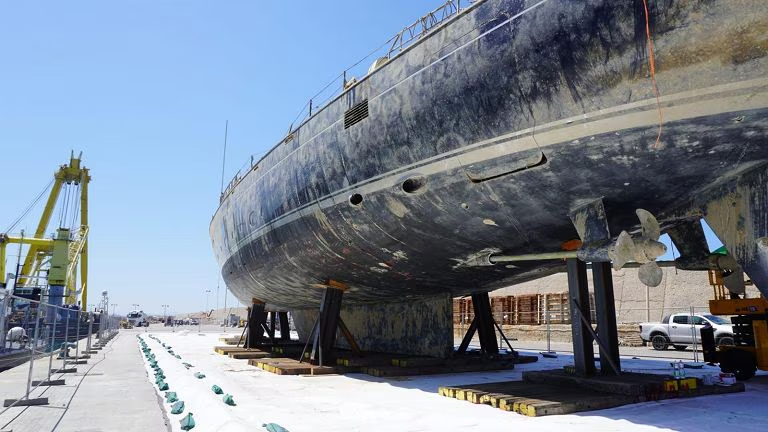
Attention has centred on the yacht’s configuration at anchor, including the state of its sails and keel, and how these may have affected stability in gusting conditions.
By definition, a squall can contain sustained winds of more than 60 knots. Loose Cannon has quoted several naval architects for stories published in the months after the sinking. Among them were Roger Long (now retired), Tad Roberts of Tad Roberts Yacht Design and Guillermo Gefaell of Spain’s Association of Naval and Ocean Engineers. These three, among others, concluded that windage from Bayesian’s extraordinary 75m mast combined with a high centre of gravity meant the yacht was liable to capsize even in moderately high gusts of around 65 knots. As part of that conclusion, Long, an expert on large sailing vessel stability, had calculated that Bayesian would have been “committed” to capsizing once the angle of heel reached 50 degrees.
The yacht’s builder, Perini Navi, part of The Italian Sea Group, has rejected suggestions of design limitations. Giovanni Costantino, the group’s chief executive, has described the vessel as “unsinkable” and argued that lapses in onboard procedures, such as failing to secure openings or adjust the keel, may have allowed water ingress and accelerated the sinking.
The company has launched legal action against media organisations reporting on the case and parties linked to the yacht’s operation, including Mike Lynch’s widow and the New York Times, citing reputational and commercial damage. The firm has declined to comment to global media on the MAIB’s interim report.
TISG acquired Perini Navi in January 2021 from a bankruptcy auction along with Perini Navi’s brand, archives and real estate. The firm recently appointed a new CFO to oversee an audit, after launching a forensic financial investigation into ‘unauthorised’ overspending.
Other factors under review include whether doors or hatches were left open, which could have increased flooding once the vessel listed, and whether the crew had sufficient information about how the yacht would behave in gusting conditions.
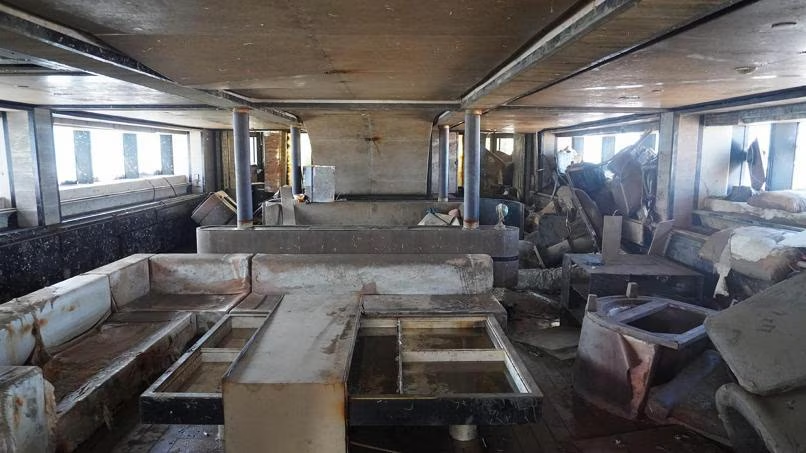
On the night itself, conditions began to deteriorate in the early hours, with winds building before a sudden escalation shortly after 4am. The yacht, with sails furled and its centreboard raised, capsized to starboard and sank within a short period in waters about 50 metres deep. Some on board attempted to escape, with later reports indicating that improvised means, including using furniture as a ‘ladder’, were used as the vessel listed.
Victims included the yacht’s chef, Recaldo Thomas; Morgan Stanley International chair Jonathan Bloomer and his wife Judy Bloomer; and lawyer Chris Morvillo and his wife, Neda Morvillo. Lynch’s wife, Angela Bacares, the owner of the vessel, was among those rescued.
Recovery operations were prolonged due to depth and site conditions, with divers limited to short shifts. The wreck was eventually raised months later following a complex salvage operation, in which a Dutch diver died.

Separately, Lynch’s estate is facing substantial financial pressure from civil proceedings in the UK, where Hewlett-Packard is pursuing damages of around £1.5bn relating to its acquisition of Autonomy in 2011 for £7bn.
The post Bayesian superyacht ‘did not sink due to storm’, fresh reports suggest appeared first on Marine Industry News.