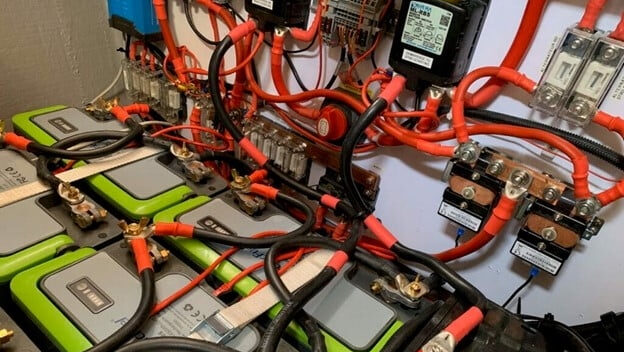
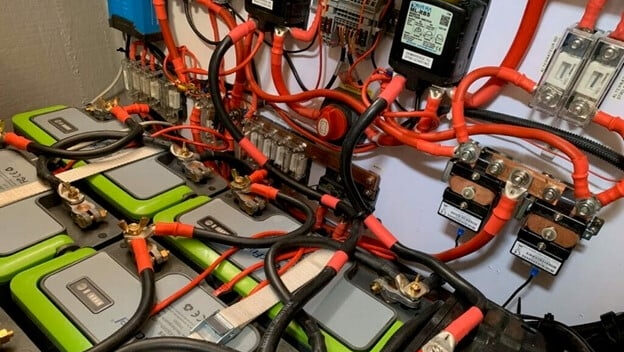
Electric Fuel’s believes its recently certified Li-Ion 48V marine battery is a gamechanger in the electric boat industry, creating a new standard for safety and performance. It says its marine battery surpasses all current safety and environmental standards with its IEC62133 certification, creating a new threshold for high-end, high-performance batteries for electric boats.
“Certified safe Li-Ion 48V marine batteries are the future,” posits Ronen Badichi, president and general manager of Epsilor Electric Fuel. They’re already being adopted by luxury yachts and racing boats with owners who look to maximise performance.
“48V marine batteries will soon dominate the industry.”
With 3,000Wh/60Ah capacity, Electric Fuel says its Li-Ion 48V battery supplies the highest energy density in the market – double that of traditional LiFePO4 batteries.
From lifejacket lights to high-performance racing applications
Badichi points out that the sophisticated technology integrated on racing boats and luxury yachts create high energy and power needs from marine batteries. “It’s natural that owners of these boats choose the best marine batteries – with the highest energy density and strictest safety certification – to protect their expensive vessels.”
Plus, he explains, the higher voltage efficiently powers more powerful and higher voltage motors while generating less current and less heat, enabling the use of thinner, lighter cables. Larger yachts benefit from reduced voltage drop over long cable runs while racing boats benefit from the reduced weight.
Why 48V systems are gaining ground in electric boating
For the past three decades, the company’s been the largest supplier of water-activated, battery-powered lifejacket lights in the aviation and marine industries. But in 2018 it moved towards powering racing boats.
Merav Kolody-Shubeli, director of international sales at Epsilor Electric Fuel and product manager for Marine Batteries says: “Unfortunately, our sales agreement prohibits us from sharing names – but I can assure you they [batteries] are [in] the top competitions in the world, primarily Europe and the US.”
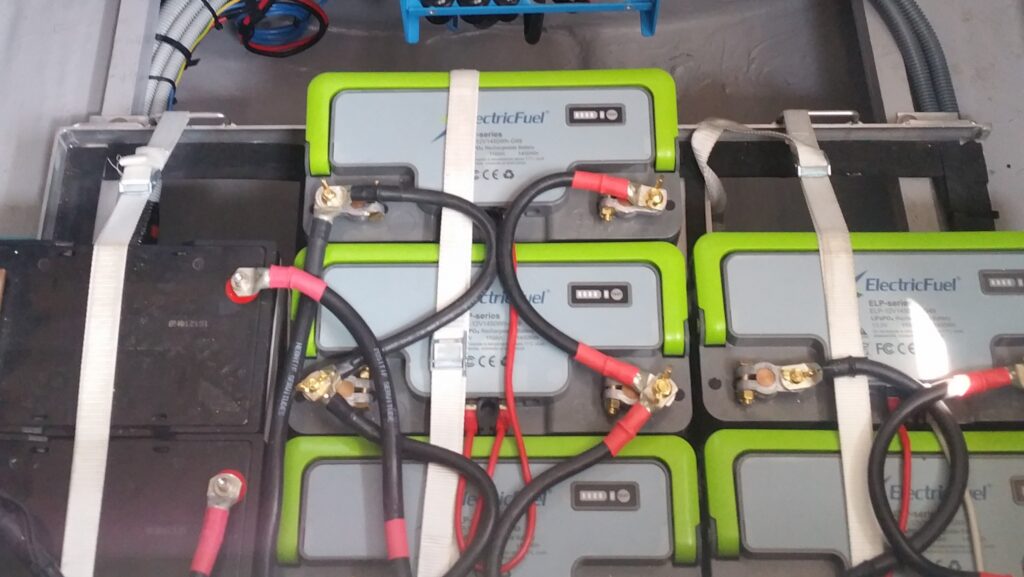
The company’s 48V batteries were originally developed as an energy solution for transportation and mobility applications: golf carts, hybrid vehicles, electric trains, etc. “We received inbound inquiries from naval engineers supporting racing boat competitions who were interested in the battery’s light weight and high energy density and modified the battery to best meet their needs,” says Kolody-Shubeli.
Marco Donati, founder at Donati Racing, is a convert due to the 48V batteries saving weight and space which are, as he points out, “critical elements for boats, particularly racing boats.”

The company met Donati when exhibiting for the first time at Metstrade. “Electric Fuel was new to the marine battery industry, we sponsored a booth and Marco was interested in the battery because of its high energy density.
Designed under extreme racing conditions
“Initially, Donati purchased Electric Fuel’s 12V marine battery for the racing boats he managed. At the time, 12V was standard in the boating industry and developed by many battery producers,” explains Kolody-Shubeli.
“As our professional relationship deepened, Marco became almost a design partner in the development of Electric Fuel’s 24V and 48V marine batteries. We ensured the batteries not only supplied the highest energy density of any marine battery in the market, but also remained the most lightweight and we added features specifically to meet the needs of racing boats, for example: an ergonomic handle for easy transfer between racing boats and chasing boats.”
Now she calculates that Electric Fuel has supplied over 500 batteries for racing boats since 2018.
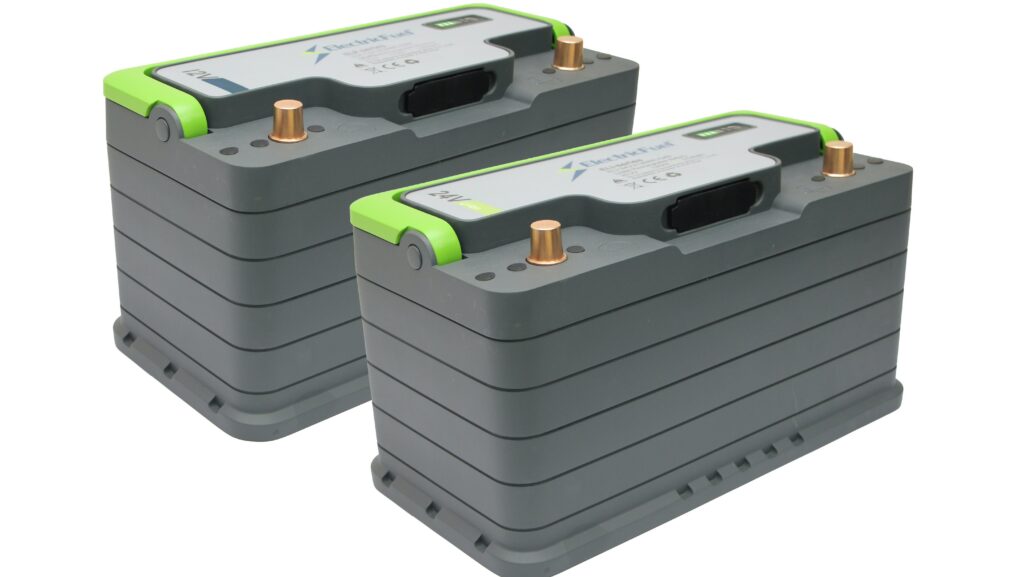
At just under 17kg, she says the marine battery is one of the lightest in the market making the transfer between chasing boat and racing boat much easier and smoother – and providing an advantage during racing competitions.
Batteries face constant exposure
When in use, the batteries face constant exposure to corrosive seawater, frequent in-motion transfers and numerous charges. Despite these demanding conditions, the batteries maintained maximum levels of performance.
“Providing an energy solution for racing boats is an extreme challenge for any battery supplier. Typically, marine batteries are stored in dry conditions on the boat and on land and are transferred to charge on land at a leisurely pace and while ensuring dry conditions. The reality of a racing competition with high-powered, high-energy, extremely fast boats requires multiple charges of the boat battery during the race.
“There’s no pit stop to charge a battery and no transfer under hermetically dry conditions. In fact, the opposite is correct. While a racing boat is continuing to charge ahead, its team must safely transfer the empty batteries to charge and accept the charged batteries from the accompanying chasing boat. Both boats are sailing at high speeds while transferring – giving our lightweight marine battery an added advantage in the marine battery industry.
“While developing these marine batteries to perform for top racing competitions, we continued to prioritise safety. We knew the batteries would get wet during transfer, be dropped on occasion and have to withstand some damage during a race. Despite these challenging conditions, our batteries were designed to continue to perform and supply the highest energy density in the market.”
On-ground support for development and training
As part of the initial testing process, engineers were sent to provide local support. “Our engineers went above and beyond by travelling to the races and providing on-the-ground support during training and the races.”
Although the batteries “underwent severe testing before being sent to the customer . . . we understood that the intense needs during a racing competition would be difficult to clone in a lab,” Kolody-Shubeli says.
“While integrating Electric Fuel marine batteries during training, our engineers ensured communication and CAMBAS worked and integrated smoothly with the sophisticated technological systems used on racing boats, including their navigation and hydraulic systems. Our support lasted over the course of a few months and modifications were made to the software or mechanisms on-the-ground.
“Racing is very demanding on a battery. The transfers, multiple charges and corrosive seawater environment mean that many issues are liable to arise. That’s what made the integration and on-the-ground support of Electric Fuel engineers so important.”
The next generation: higher standards and broader ambition
And as for the future? Badichi notes that “Electric Fuel batteries have the highest energy density in the market – any market. This includes our marine batteries, Combatt 6T batteries for armoured vehicles, drone batteries, or any other battery. Our next product that we haven’t even developed yet – it will lead in its market in terms of energy density.”
Kolody-Shubeli is more specific. “In 2027, the new generation of Electric Fuel’s 48V marine batteries will be launched with an even higher level of quality: including IP67 water resistance certification. This upgrade will not only serve our existing clients in the racing boat industry, but also unmanned surface vessels and robots.
“We look forward to presenting the new 48V marine battery at Metstrade in 2027.”
Prior to that, she says the company’s looking to expand to work with boat builders and boat designers.
“Naval engineers are interested. The technical specs – especially the high energy density and IEC62133 safety certification – speak for themselves and support the design of high-powered, high-quality, sophisticated boats. We are looking forward to continuing to expand our customer base in the marine industry.”
“The advanced technology being integrated on boats forced the industry to move from LiFePO4 batteries to Li-Ion, and is now pushing the industry towards higher energy, higher voltage and higher safety Li-Ion batteries,” Badichi concludes. “Demand for energy is always growing.”
The post Electric Fuel positions 48V Li-Ion battery as new benchmark appeared first on Marine Industry News.