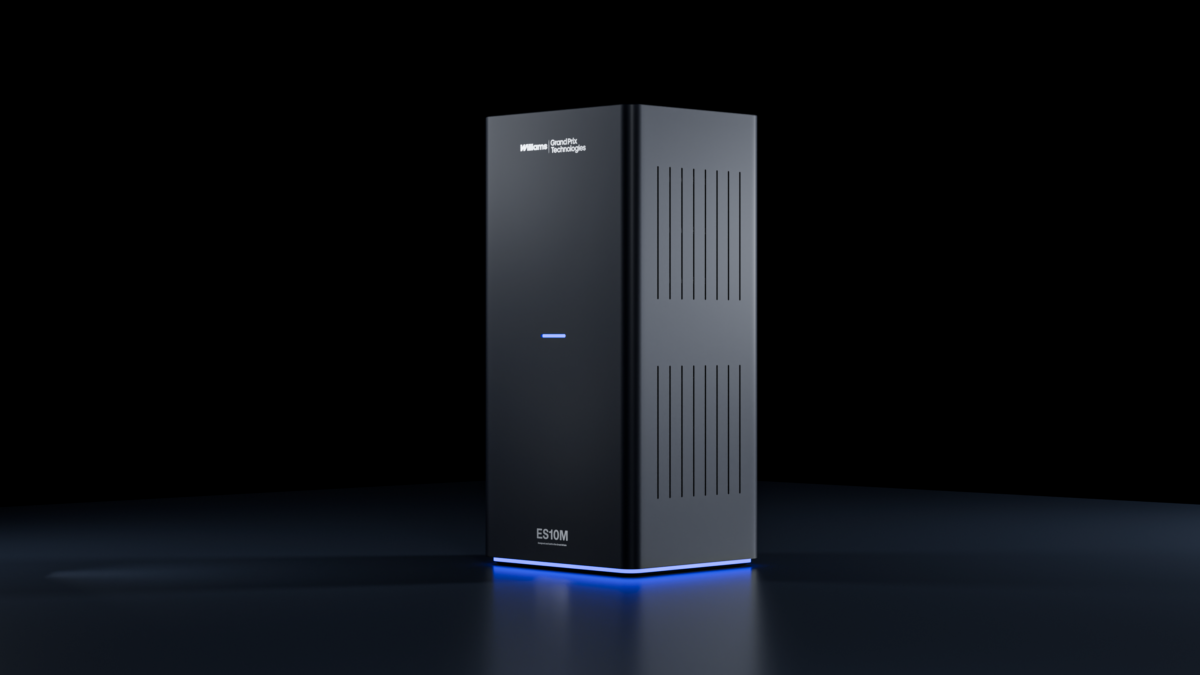
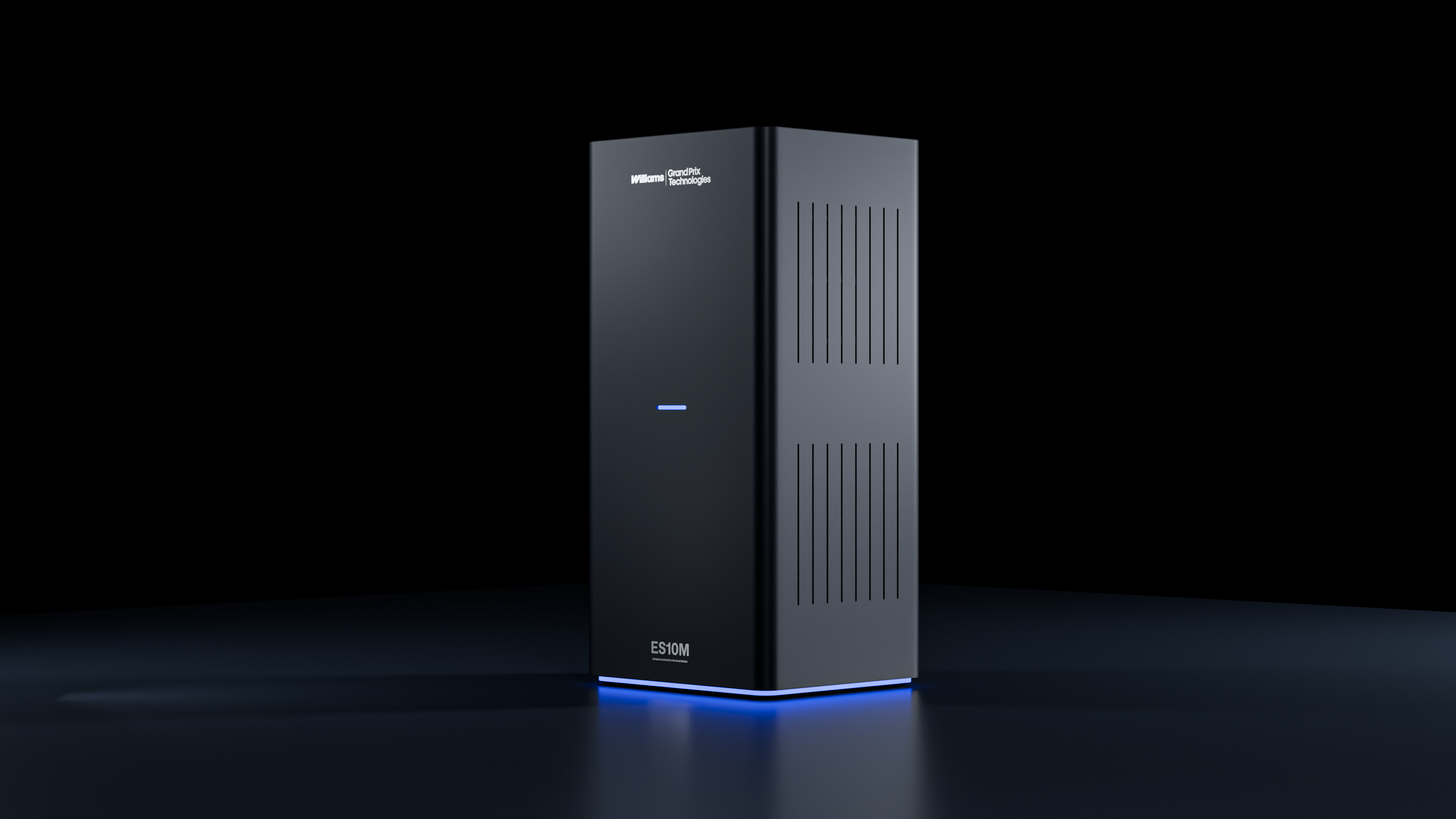
Williams Grand Prix Technologies has entered the marine sector with the launch of the ES10M, a battery system developed for superyachts, support and explorer vessels, hybrid propulsion applications and refit programmes. It is the company’s first product designed specifically for the marine industry.
Based in Grove, Oxfordshire, alongside the Atlassian Williams F1 Team, Williams Grand Prix Technologies adapts Formula 1 motorsport innovations and simulation technologies for sectors such as defence, energy and mobility – and now marine.
Selin Tur, managing director and chief technology officer of Williams Grand Prix Technologies, says: “As superyacht builders and refit specialists seek to improve energy efficiency and adopt alternative propulsion technologies, this is the ideal time to bring our extensive battery systems expertise from the Atlassian Williams F1 Team to the marine sector. Formula 1 is an environment where complex performance challenges are solved under immense pressure and where excellence is non-negotiable. Those same engineering principles, disciplines, and standards are directly applicable to the evolving needs of the superyacht industry.”

The ES10M is a scalable battery system suitable for a range of marine applications. The firm says it is intended to support complex operating profiles and class safety requirements using machine learning-based predictive control.
Its modular architecture and wide operating voltage range allow it to be configured for different vessel types and installation layouts. The system is intended for use in superyacht hybrid-electric propulsion, where its power density supports an extended operating range. It can also be fitted during refit projects, increasing energy capacity within the same installation volume while providing battery-powered hotel loads during longer periods at anchor.
The battery system can be configured for yachts exceeding 100m LOA through multi-bank installations across dedicated battery compartments. More compact single-rack installations are suitable for yachts from 50m LOA, allowing the system to fit within smaller engineering spaces.
The ES10M is also aimed at support and explorer vessels operating in demanding conditions or on extended voyages. Williams says it can be scaled for fully electric propulsion in tenders, chase boats and support craft.

Performance and safety
The ES10M has a gravimetric energy density of 200Wh/kg and a volumetric energy density of 325Wh/l at module level. Each module stores 9.8kWh at 50.4V and weighs 48.8kg. System configurations range from 39kWh to 4.2MWh and operate between 201.6V and 907.2V. The battery is designed to withstand thermal, vibration and ingress-related operating conditions.
Williams Grand Prix Technologies says the ES10M incorporates a “layered” safety architecture. Thermal-grade materials and the selected cell format are intended to limit cell-to-cell propagation, while an integrated gas management system is designed to provide controlled venting during abnormal operating conditions.
The battery management system uses physics-informed machine learning to continuously monitor cell and module performance and supports remote monitoring and diagnostics. A supervisory controller can isolate individual battery strings. According to the company, the system predicts load behaviour, identifies potential fault conditions before they occur and is designed to extend battery life.
The ES10M carries an IP67 ingress protection rating at module level and has been designed to maritime-grade EMI/EMC standards. Lloyd’s Register class compliance is currently in progress.
Tur adds: “The ES10M is the first step in our long-term strategy for the marine sector. Designed specifically for marine applications, it reflects our commitment to bringing elite motorsport-derived engineering expertise to an industry undergoing significant technological change. As we expand our marine offering, we will continue to apply the same data-driven, physics-informed methodology and uncompromising engineering standards that have defined our approach for decades.”
More information on the ES10M battery is available on the Williams Grand Prix Technologies website.
The post Formula 1 technology applied to new marine battery system appeared first on Marine Industry News.