Spirit Yachts is known for handcrafted wooden yachts, but behind the scenes, the company is investing heavily in modern production methods. From CNC machining and lean manufacturing to repeatable product platforms and new material choices, MIN visits Spirit Yachts’ yard in Ipswich to understand how the company’s finding efficiencies.
That Spirit Yachts’ business is evolving is evident in the diversity of projects currently moving through the yard. It’s simultaneously working on a performance-focused race boat, a Spirit 78 sailing yacht and two P50 powerboats (a P50 Sport launching summer 2026 and a P50 Coupé for 2027), giving the company exposure to multiple segments of the premium yacht market. The projects involve both conventional and electric propulsion.
Finding efficiencies without losing craftsmanship
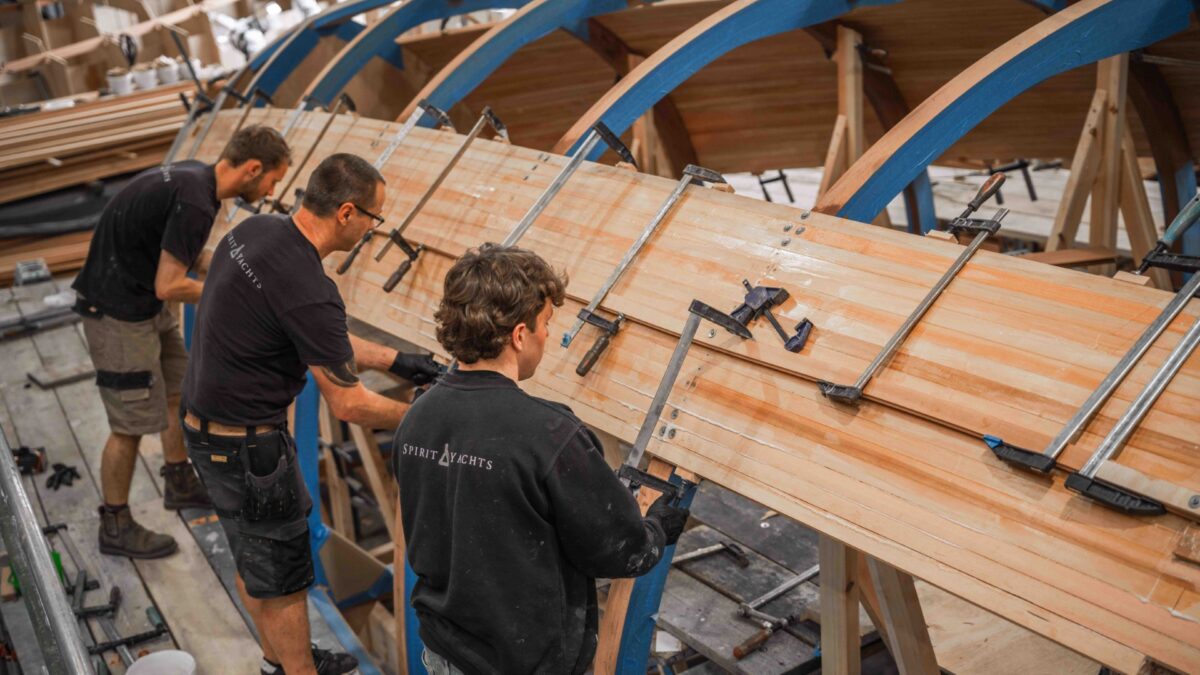
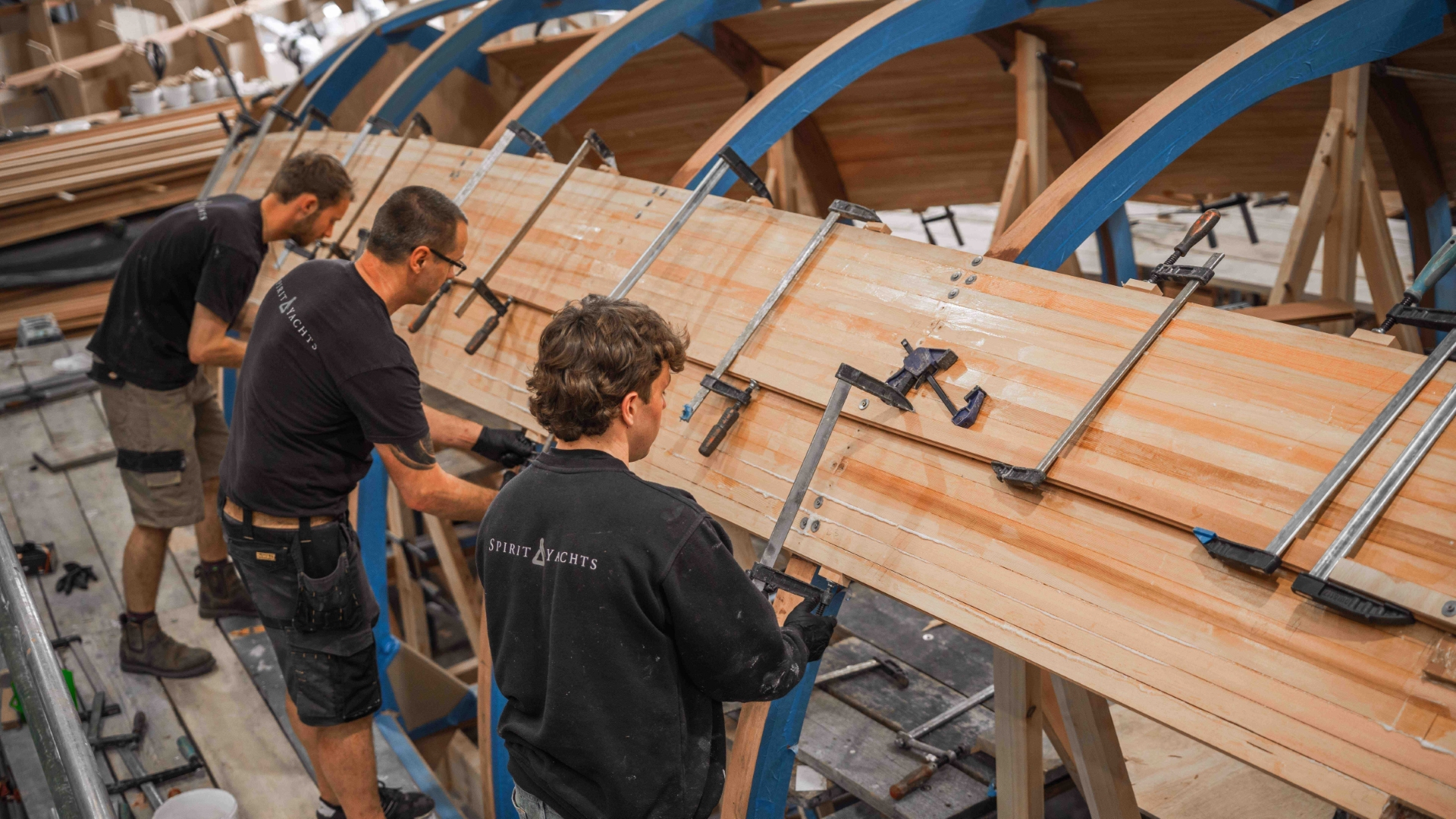
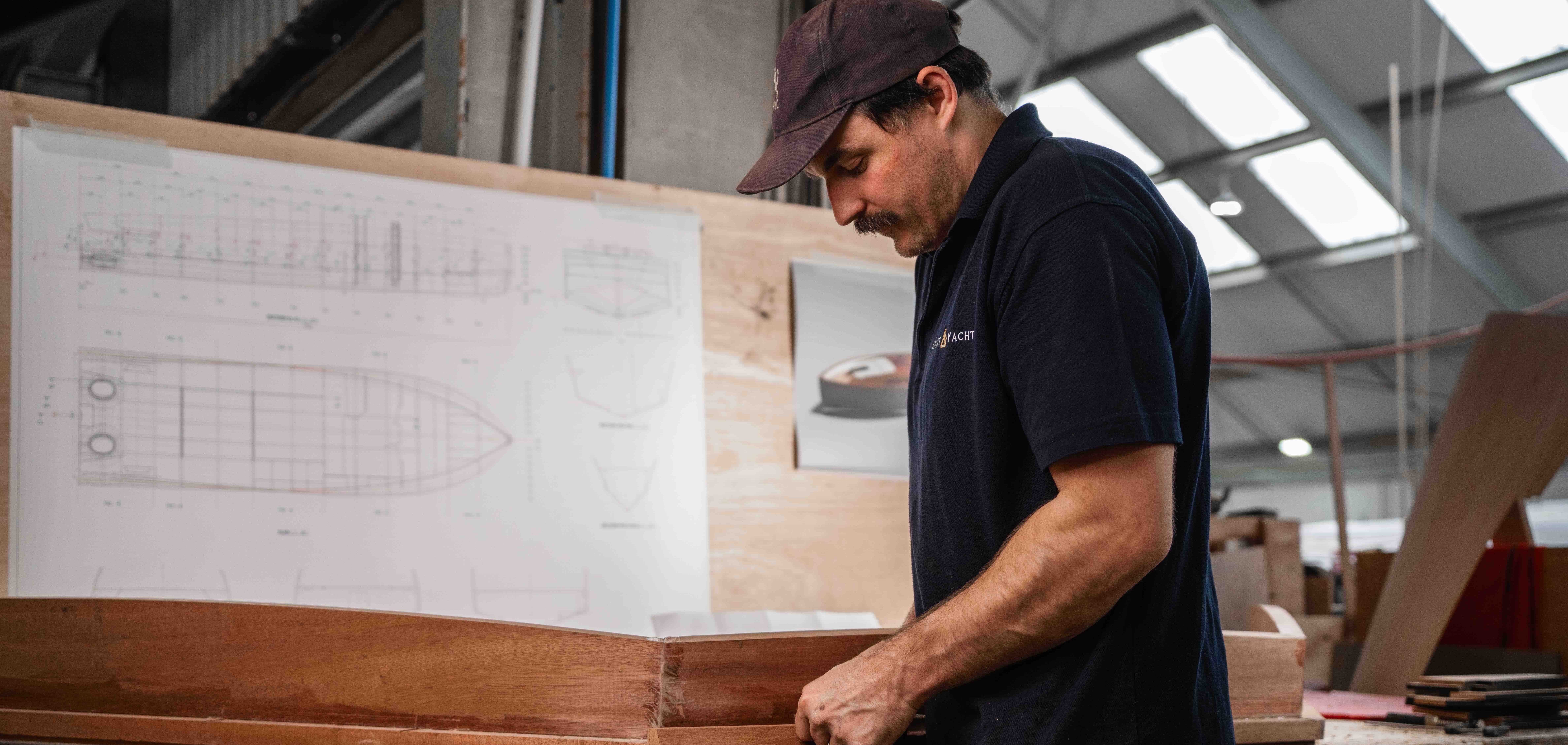
While Spirit remains committed to traditional hand-built construction methods, it’s increasingly adopting modern manufacturing techniques, which deliver efficiency without compromising craftsmanship.
Karen Underwood, MD, is quick to point out that the iconic hull construction remains entirely manual; there’s a new philosophy at play. That’s to reserve skilled labour for the areas that owners genuinely appreciate, while using technology to improve consistency and efficiency elsewhere.
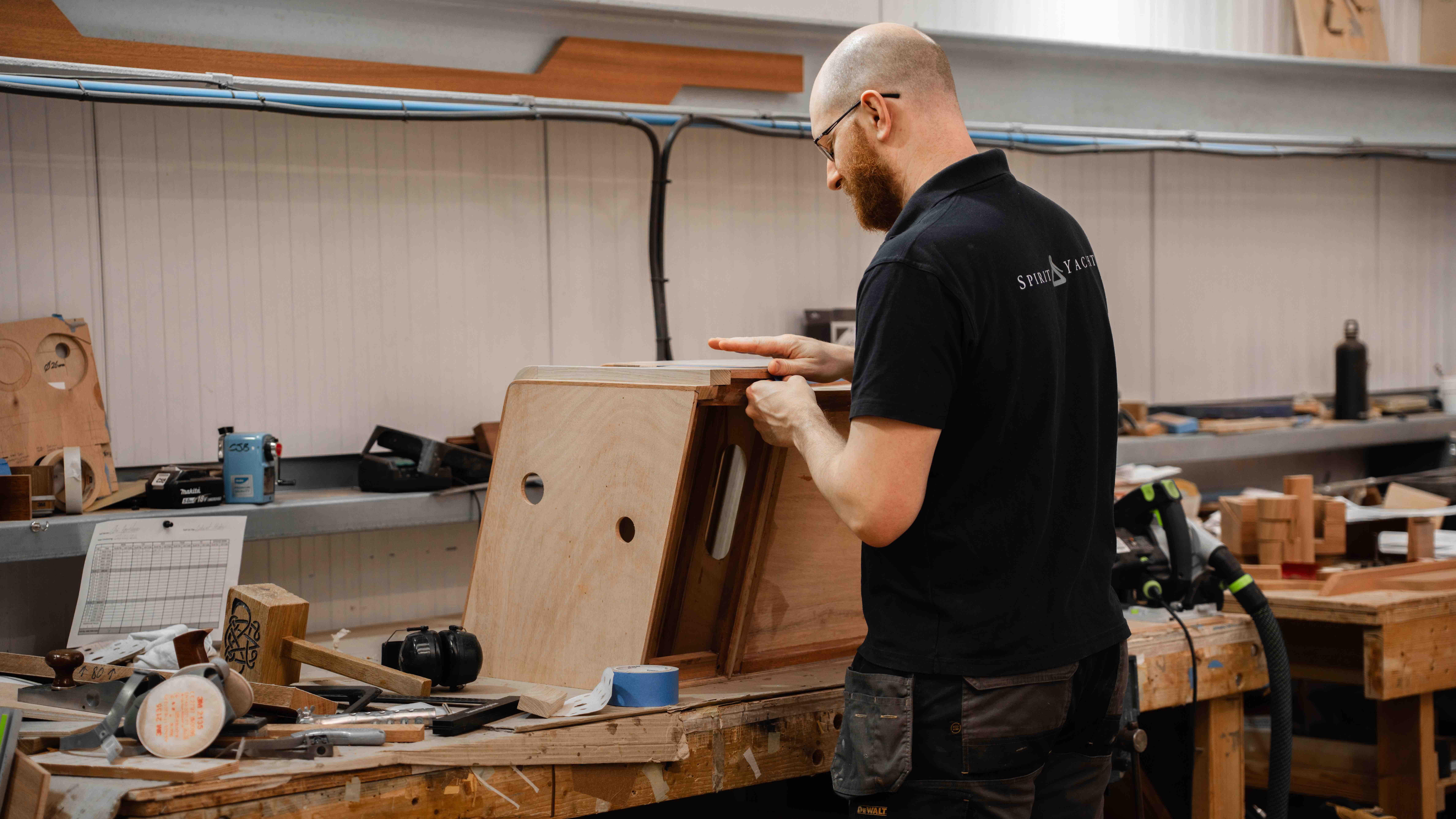
This means Spirit has expanded its use of CNC manufacturing for components that customers never see.
“It’s about making sure the owner is getting value from handcrafted elements,” says Helen Porter, marketing director. And if no one would know whether an element was handcrafted or not – because it’s out of sight – there’s value for both the business and the owner to move towards CNC for certain discreet construction.
The P50 as a strategic milestone
As part of this change of approach, the new P50 has become the company’s flagship lean-manufacturing project.
“She is our poster girl for that type of production,” says Underwood. Details of the P50 can be found on Spirit’s website.
While the yacht introduces new technology such as Volvo Penta IPS drives and joystick controls, its significance extends beyond the product itself, illustrating how Spirit is balancing traditional craftsmanship with a more structured and scalable approach to production.
The P50 is being used as a platform for manufacturing improvements and repeatable production processes. Large sections of the vessel have been assembled away from the hull before being installed, thereby reducing congestion and improving workflow.
The programme has required extensive investment in scheduling, design documentation and production planning.
“The amount of work that has gone into that to produce scheduling is massive,” says Underwood.
Spirit’s objective is to create repeatable processes that improve efficiency while maintaining the handcrafted quality owners expect.
“It’s about showing owners that they’re getting value from the build time,” says Porter. “We’re making those efficiency gains, but they’re still ending up with a yacht of the same quality.”
Thinking beyond the first boat
The P50 programme has also become central to Spirit’s efforts to improve repeatability across future builds.
While hulls may share common structures, subsequent boats can feature substantially different layouts and specifications. The second P50, for example, incorporates larger doors and a third cabin despite sharing the same hull mould as the first.
The company has invested heavily in tooling, production planning and manufacturing processes, with the objective being controlled repeatability rather than mass production. Repeatable tooling, moulds and component systems allow the company to reduce development time.
Supply chain warning of potential disruption
Supply chain resilience remains a key focus for Spirit Yachts, with Underwood warning that potential disruptions may be emerging in several product categories.
“If you’re talking about engines, I think we’re going to come up with some issues,” she says. “It’s components as opposed to the actual engine itself.”
The company is also monitoring the availability of fabrics and other specialist products, while the annual August shutdown across parts of Europe continues to create planning challenges.
Now she says: “As a UK manufacturing business, we should be looking at what is available in the UK. We should be doing that as standard.”
Developing bespoke systems with suppliers
The company’s also co-developing bespoke systems with suppliers. For example, rather than purchasing an off-the-shelf solution, Spirit worked with Lewmar to develop a hidden anchor system for the P50.
“We did some R&D together, and that worked really well,” says Underwood.
Collaboration is one of the key qualities Spirit looks for in suppliers.
“Our design team always likes to see how far they can push the envelope,” agrees Porter. “The suppliers that stand out are the ones that go away, think about it and come back and say, ‘yes, we think we can make that work’.”
Spirit views its supplier relationships as long-term partnerships rather than transactional arrangements.
“I don’t really like wishy-washiness,” says Underwood.
Reliability is equally important. Spirit expects suppliers to remain engaged long after delivery and to support owners when problems arise.
“It’s about the supply chain not completely ‘doing a runner’ when the boat is on the water,” says Porter. “It’s about knowing who your key suppliers are, who would be there when you need them.”

Rethinking materials
Alongside its supplier strategy, Spirit continues to evaluate the materials used throughout its yachts.
One of the company’s most significant recent developments has been the introduction of a new decking material as part of its ongoing search for sustainable alternatives to teak.
The company has moved away from Douglas Fir and is now using Java teak supplied by family-owned timber specialist Sykes. Underwood says it’s already been installed on two yachts. The change forms part of Spirit’s commitment to maintaining timber decks rather than adopting synthetic alternatives.
“It’s taken a lot of time, a lot of research, a lot of effort and a lot of testing to come to that decision,” adds Porter.
Underwood notes that the newer material requires greater consideration during installation, including grain patterns, knot placement and material utilisation.
With new partnerships being established, material innovation in decking and CNC introducing efficiency, it’s clear that Spirit’s drive to industrialise certain parts of the business – without industrialising the product – looks set to strengthen the company’s offering.
The post Inside Spirit Yachts’ manufacturing evolution appeared first on Marine Industry News.