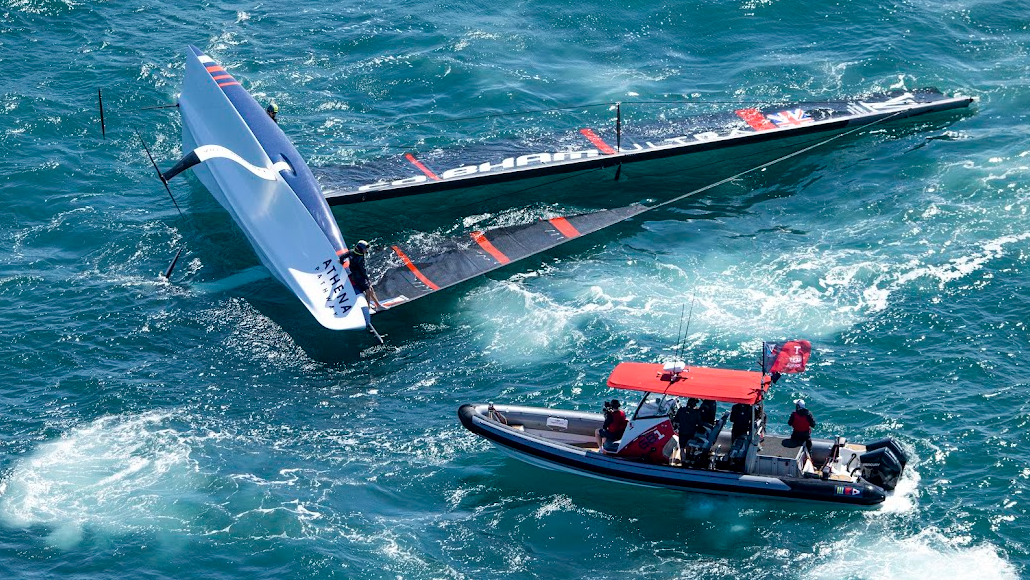
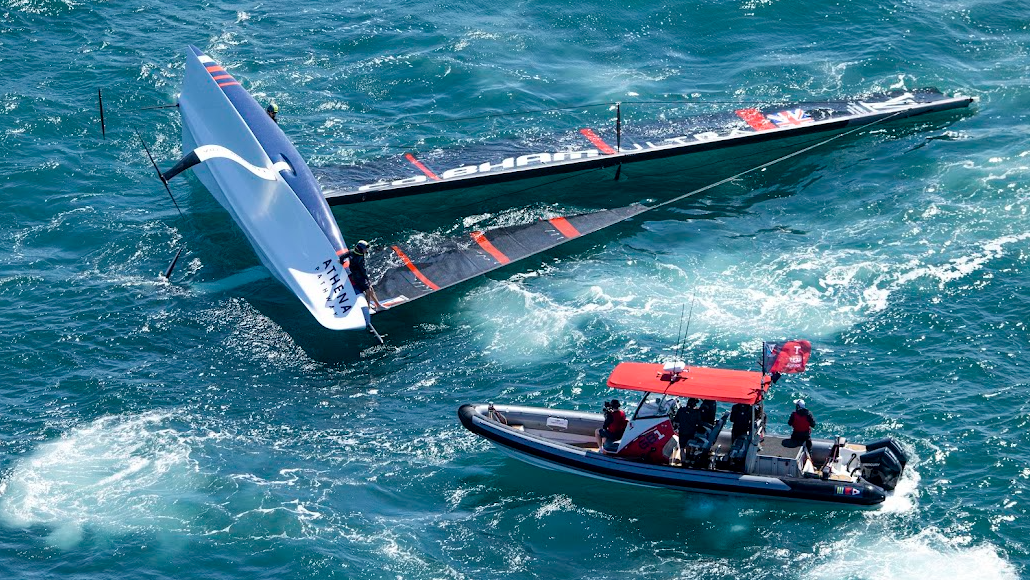
“We have a boat,” says Sir Ben Ainslie, team principal for GB1, the British challenger of record for the 38th America’s Cup. “We’ve always had a boat, contrary to popular opinion.”
Now he says the team is “crackin-on” and making modifications, ready to launch.
“I can’t tell you when we’re launching, but sometime in the not-too-distant future,” he told PlanetSail in Cagliari where the Louis Vuitton Preliminary Regatta is currently underway.
In March 2026, Sir Jim Ratcliffe’s company Ineos began legal action against Ainslie’s team, Athena Racing, seeking the return of the AC75 yacht that competed as Ineos Britannia during the 37th America’s Cup in 2024.
Ineos legal action: what the company is actually claiming
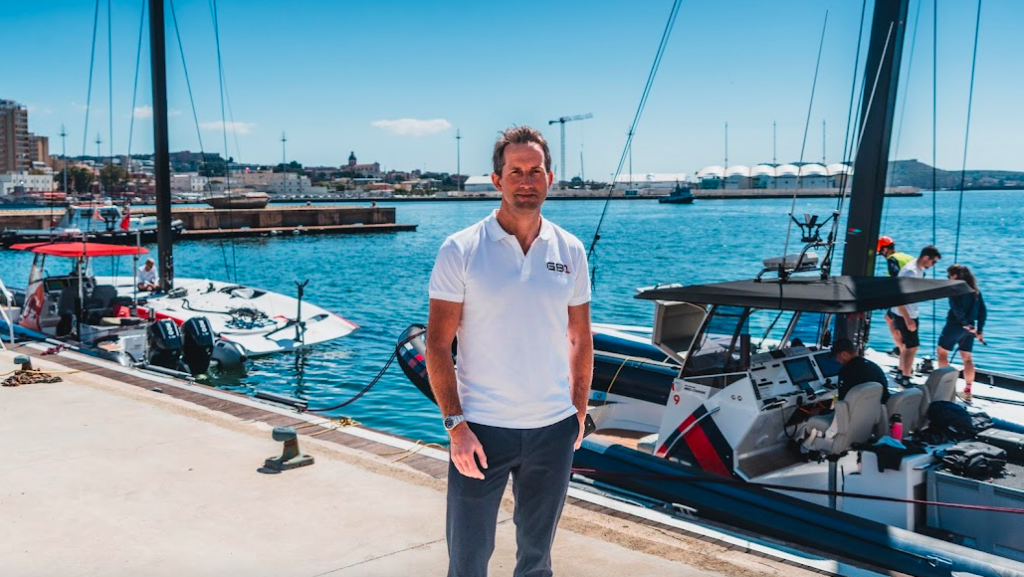
The current situation is both “unfortunate and a shame,” says Ainslie. “We had a great relationship with Ineos and achieved a lot.”
At its highest level, the argument between the two parties centres on an asset ownership dispute over the AC75 and associated rights.
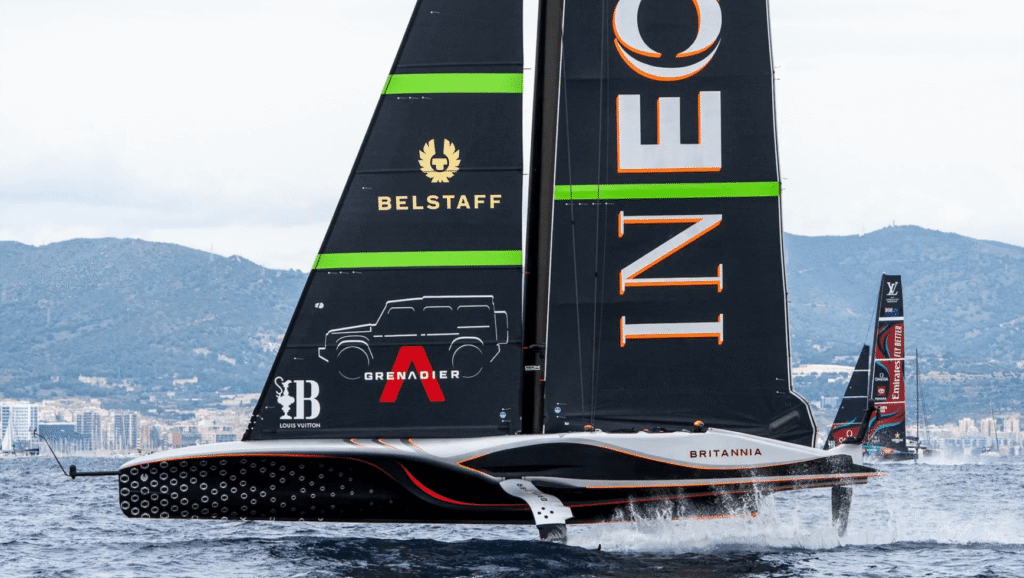
Ineos’ legal claim centres on ownership of the AC75 yacht used in the 2024 America’s Cup campaign rather than any allegation of wrongdoing by Sir Ben Ainslie personally. Ineos argues that Britannia belongs to it, because Ineos funded and built it. Therefore Athena Racing should not retain or use it for the next cup campaign without permission.
Athena Racing’s position is effectively the opposite: Ainslie’s team says the relevant assets have always been in Athena’s possession and ownership, meaning continued use of the yacht for the next America’s Cup should not come as a surprise.
While Ainslie says that lawyers are expensive, and that he was “bemused to see the statement suggesting it was all Ineos that got us to the final of the America’s Cup – I always thought it was a partnership and we did a great job together – my goal, and the team’s goal, has always been to win the America’s Cup.”
Ainslie notes that his organisation has tried to diffuse the situation legally, and publicly hasn’t really said much.
“Ineos has done most of the running on that front. We’ve tried to be respectful, but at some point we have to defend our position, and that may happen in the near future.”
Watch Ainslie’s full interview with PlanetSail.
Louis Vuitton Preliminary Regatta underway in Cagliari
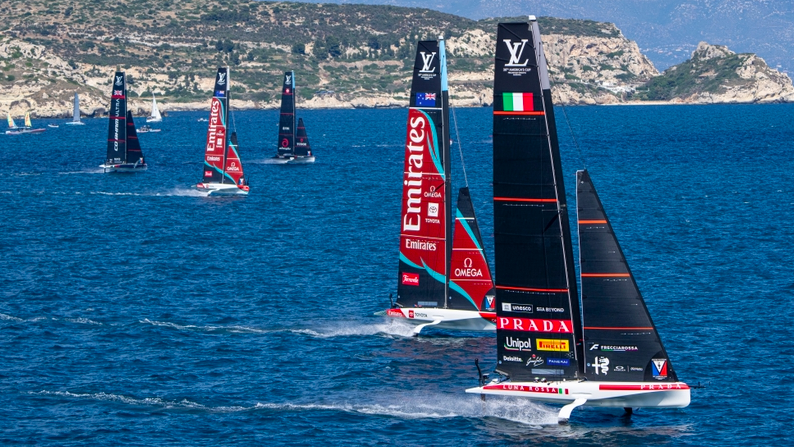
The first event of the 38th America’s Cup gets underway today (22 May). This preliminary regatta is the first time teams have raced since Barcelona 2024. It serves as an early benchmark for performance, crew combinations and systems testing.
The event marks the first time in official America’s Cup racing where women and youth teams will compete on an equal footing against the senior squad sailors. Each competing nation was able to enter up to two AC40 race boats for the regatta, one representing their senior team and another representing their women and youth teams. Britain, New Zealand and Italy have all entered two teams while Switzerland and France have both entered one team representing their senior squads. All teams will be racing in the AC40, a one-design, foiling monohull that was raced in the women’s and youth events at the 37th America’s Cup in Barcelona in 2024.
Teams are competing in equalised AC40 foiling boats. Unlike the AC75 America’s Cup boats, the AC40s are one-design, meaning the emphasis is on crew work, sailing skill and team execution rather than design advantage.
“It’s a beautiful venue and great to see AC40s fleet racing again. It’s a line in the sand to get active, racing again, and showcase what the America’s Cup is all about,” says Ainslie.
Naples 2026: the wider America’s Cup picture
Meanwhile, it’s been confirmed that Naples will host the second Louis Vuitton Preliminary Regatta from 24–27 September 2026.
The event will serve as a test run ahead of the 38th America’s Cup in 2027, when Naples becomes the first Italian host city in the competition’s history. Racing will take place in the Bay of Naples. The live operational event will give organisers, teams and the city an early chance to test logistics, venue readiness and public engagement before the main event.
Italy positioning America’s Cup as nationally significant
Italian government officials, Naples city leadership, regional representatives and America’s Cup executives were present for the announcement showing that Italy is positioning the America’s Cup as a nationally significant project – offering benefits other than just sport. It’s being repeatedly framed as an economic, tourism and regeneration catalyst tied to the long-running redevelopment of Bagnoli and broader urban renewal plans.
Teams will initially be based at the Navy Logistics Command in Nisida, rather than Bagnoli. That’s because redevelopment work in Bagnoli is ongoing. The solution is offering a practical workaround to infrastructure timing pressures – while keeping Naples on schedule and allowing redevelopment work to continue without delaying competition.
“We’re quite comfortable with how things are playing out,” says Ainslie.
AC75 upgrades: the engineering race
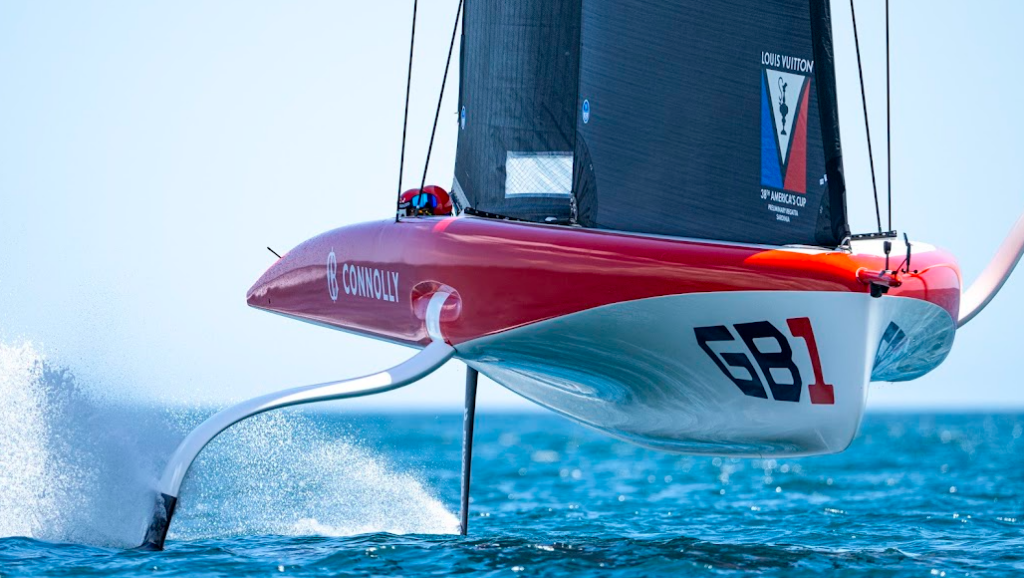
The AC75 modifications are the main engineering focus of the current America’s Cup cycle and are driven by the 2027 rule changes rather than wholesale new boat design. Teams are required to reuse an existing AC75 hull (from 2021 or 2024) and then carry out significant adaptions to the new rule set – most notably reworking foil systems, control electronics, cockpit layout, and onboard power systems, including the shift away from cyclors to battery-based energy storage and management systems. The hull itself is largely retained, but internal structure, appendage interfaces, and systems architecture are heavily reconfigured to fit the new crew configuration and performance rules.
These upgrades will begin to appear on the water in stages through 2026, as teams progressively launch modified boats for testing after initial winter rebuild phases. Early sailing is expected to be conservative – focused on validating systems, foils, and handling under the new configuration – before more performance-driven upgrades are introduced ahead of full campaign racing build-up later in 2026 and into 2027.
“Nothing in the America’s Cup is straightforward,” Ainslie continues.
“It was a shame to move away from the cyclor and physical element, but it is what it is. Everyone now has a defined power output, so you won’t benefit from having a cyclor unit that’s 20 per cent fitter than another boat. System efficiency becomes more important than ever, and that will be a key part of performance.
“It’s a tough challenge for engineers – they have to get creative about power recharge and energy efficiency.”
Timeline: Sir Ben Ainslie and Ineos’ dispute
2018–2024: partnership built around Britain’s America’s Cup challenge
The relationship between Sir Ben Ainslie and Sir Jim Ratcliffe began publicly as a high-profile partnership when Ineos backed Britain’s America’s Cup ambitions in 2018. Ratcliffe gave Ainslie’s team the financial backing to pursue a long-term campaign, which Ainslie described as critical to building a competitive British challenge. The partnership expanded into multiple cup cycles and later incorporated engineering support from Mercedes F1 under the Ineos Britannia banner. At this stage, the relationship was publicly collaborative and framed around continuity, technology and Britain’s first serious modern challenge.
Late 2024: tension emerges after Barcelona campaign
Following the 37th America’s Cup in Barcelona, where Ineos Britannia reached Britain’s first final since 1964 before losing to Emirates New Zealand, the partnership began to fracture over how to proceed into the next campaign. Relations deteriorated after the campaign despite sporting success.
January 2025: Ainslie removed from Ineos Britannia
The disagreement became public on 23–24 January 2025, when Ineos announced it would continue into the 38th America’s Cup cycle without Ainslie. Ineos said it and Ainslie “could not find agreement on terms to move forward” after Barcelona. Ainslie responded that he was “astounded” by the decision and immediately signalled a fight ahead, saying the move created “significant legal and practical obstacles” that would play out in the coming weeks. At the same time, Ainslie repositioned his operation under the Athena Racing name. At this point there was speculation around legal complications concerning ownership of intellectual property developed during the six-year partnership and uncertainty around who would represent the Royal Yacht Squadron as challenger of record.
February 2025: dispute seen as part of wider Ineos retrenchment
Separate legal action involving Ineos and New Zealand Rugby came to light. The break with Ainslie was seen as part of broader restructuring inside Ratcliffe’s sports portfolio.
April 2025: Ineos abandoned its America’s Cup challenge
Ineos blamed negotiations with Athena, withdrawing from the 38th America’s Cup after what it described as a ‘protracted negotiation’ with Ainslie’s Athena Racing. Ratcliffe’s organisation claimed it had agreed main terms, but that Athena Racing failed to conclude an agreement in time, creating a six-month delay that affected preparations for the next cup. The disagreement appeared to have shifted from a partnership breakdown to a dispute over competing British entries and future control of the challenge.
March 2026: legal fight over ownership of the AC75 boat
By March 2026, the disagreement had become a direct legal dispute over ownership of the AC75 yacht raced in Barcelona. Ineos began legal action against Athena Racing seeking return of the boat, with Ratcliffe’s organisation arguing that it funded the AC75 and therefore owned it. Ineos claimed the AC75 cost about £180m to build and argued it could not be used in future competition without permission. Athena Racing never-the-less continued preparing for the 38th America’s Cup while training in Cagliari and proceeding with campaign plans. The disagreement had evolved from a commercial split into an ownership and control battle over core campaign assets.
The post “We have a boat.” Ainslie outlines GB1 progress as America’s Cup build-up intensifies appeared first on Marine Industry News.