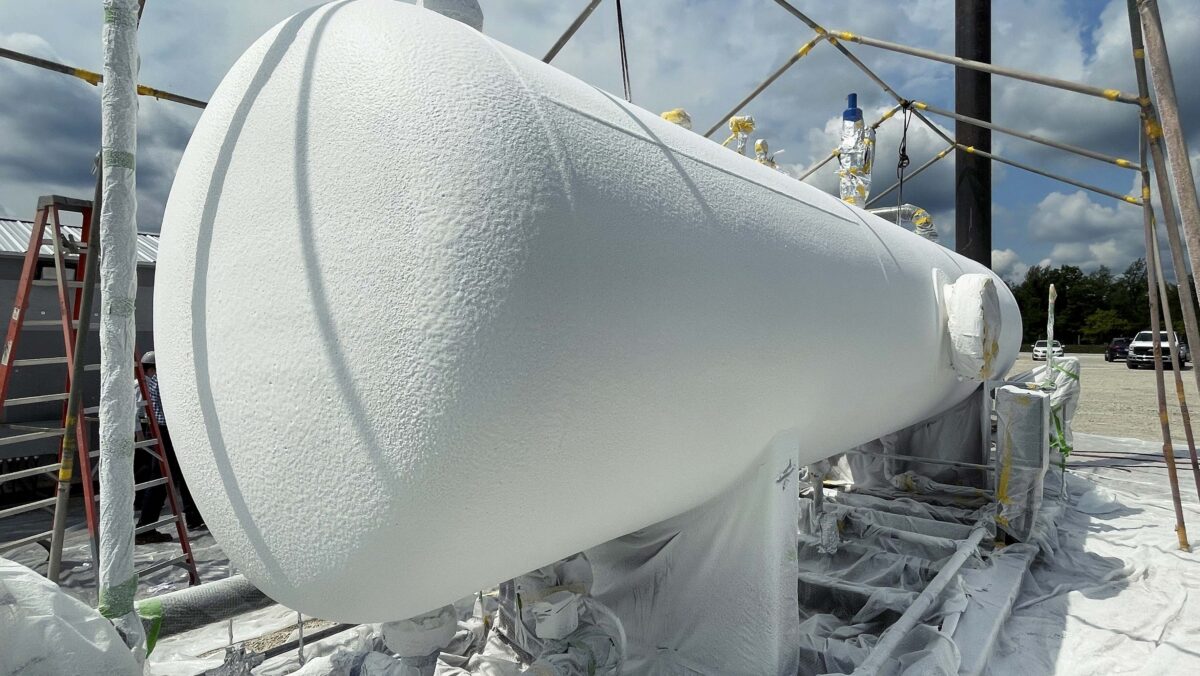
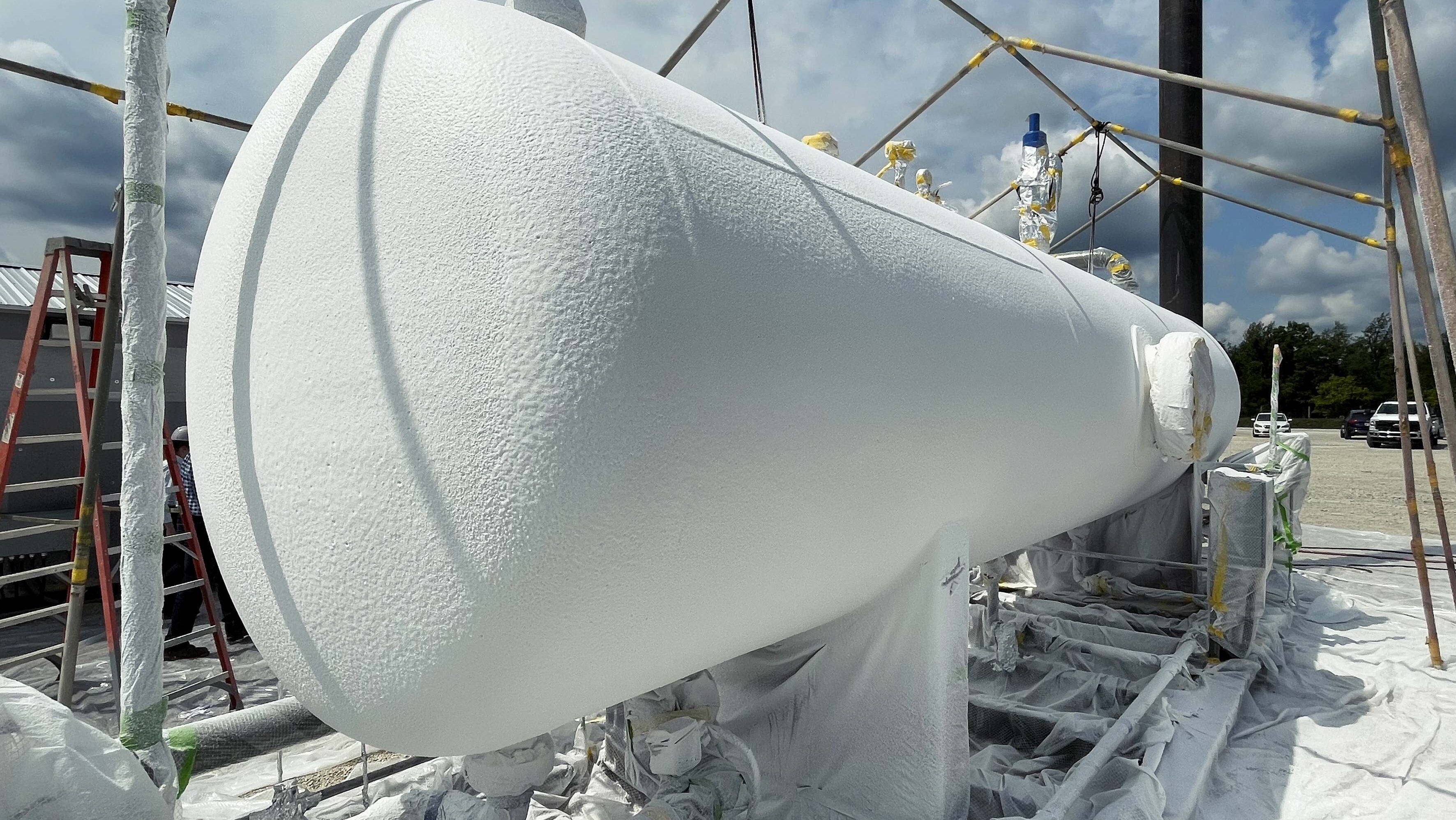
Sherwin-Williams has launched Heat-Flex AEB (Advanced Energy Barrier), a thermal insulative coating designed to prevent corrosion under insulation (CUI) by replacing traditional mineral-based insulation systems.
Neil Wilds (global product director) at Sherwin-Williams Protective & Marine, says: “Corrosion under insulation requires the presence of insulation. By removing this from an asset and applying the thermal insulative coating in its place, there is no longer any physical system under which corrosion under insulation could occur. Therefore, the corrosion under insulation is eliminated by default.”
The company states the coating is designed to replace the mineral-based insulation traditionally used on storage tanks, process vessels, and piping to retain heat, and offers a variety of sustainability benefits.
By eliminating CUI, Sherwin-Williams claims Heat-Flex AEB can help extend the lifespan of steel assets while minimising the environmental costs of production and maintenance.
The coating also has the potential to eliminate the manufacturing, shipping, and storage of materials required for a traditional system, from mineral wool insulation and the wiring, pins, and banding that keeps insulation in place, to the metal cladding.
How Heat-Flex AEB works
CUI occurs when water penetrates traditional insulation systems and becomes trapped against metal surfaces, creating a corrosive environment that is often hidden from view.
Heat-Flex AEB replaces traditional insulation with a thick film of insulative coating material, capable of retaining operating temperatures of up to 177C (350F), with excursions to 204C (400F).
Unlike traditional insulation systems, which Sherwin-Williams says can lose efficiency due to moisture ingress, the company says Heat-Flex AEB maintains consistent thermal efficiency. This enables required operating temperatures to be maintained without increasing process heat and energy usage.
Wilds continues: “When developing Heat-Flex AEB, we needed to ensure the coating itself could retain process heat at temperatures high enough to remove traditional insulation and not affect the consistency and flow of materials housed inside assets.
“Careful manipulation of the coating molecule and product formulation enabled this surprising capability, which has notable ramifications for reducing costs and improving carbon footprints, while enabling efficiencies in various facility applications.”
Sherwin-Williams says applying Heat-Flex AEB is faster and safer than installing traditional insulation systems, as personnel are not required to be in close proximity to hot assets during application.
The single-component (1K) coating is applied by spray and, according to the company, can be installed on assets operating at up to 148C (300F). This differs from traditional insulation installation and, Sherwin-Williams says, reduces burn risk, minimises disruption, and allows new assets to be coated in pre-assembly yards rather than in-situ.
The launch of Heat-Flex AEB comes as operators across marine and industrial sectors look for ways to extend asset lifespans, improve efficiency, and reduce maintenance requirements.
The post Sherwin-Williams launches Heat-Flex AEB coating to prevent corrosion under insulation appeared first on Marine Industry News.